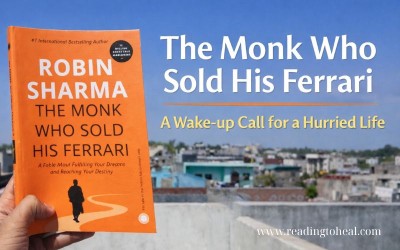
The Monk Who Sold His Ferrari - A Wake-up Call for a Hurried Life
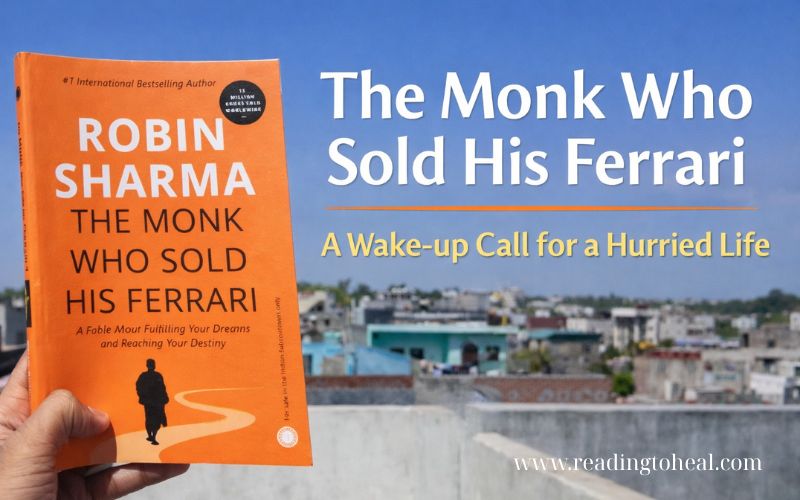
It is a journey to rediscover personal power to truly live a fulfilling life with one's mission. Reading To Heal firmly believes that this book will help you find motivation, discover your inner strength, and find the courage to walk step by step in your own destiny to live a complete and meaningful life.
💡 If you'd like to revisit the book’s wisdom in short, powerful insights, explore our collection of 25+ Best Quotes from The Monk Who Sold His Ferrari by Robin Sharma , where the most inspiring lessons from the story are distilled into memorable lines.
The Story of Julian Mantle and the Decision to Change Destiny
Having everything in his youth that anyone would want to own, the famous lawyer Julian Mantle was smug, ambitious, and had a brilliant future ahead. With a beautiful wife and a lovely daughter, life seemed perfect.
But a life that is always smooth would no longer be called life. That perfect appearance did not last long when an accident took not only his only daughter's life but also turned him into a soulless corpse. He buried his head in work day and night to escape the pain, hoping to somewhat soothe his own broken heart. As for his wife, after the pain of losing their child, his seeking oblivion in work was like the last straw that broke the camel's back, making it unbearable for her, leading to her decision to divorce.
More than 20 years passed, and Julian still wore the shell of a prestigious lawyer to hide a fragile heart scarred by suffering. His career flourished more each day, his assets piled up, and life looked glamorous, but Julian himself felt increasingly empty and lonely.
At 53, he had the physical appearance of destruction like a 70-year-old. Walter Winchell once said: "When you fall asleep in life, life often calls you with bitter wake-up calls."
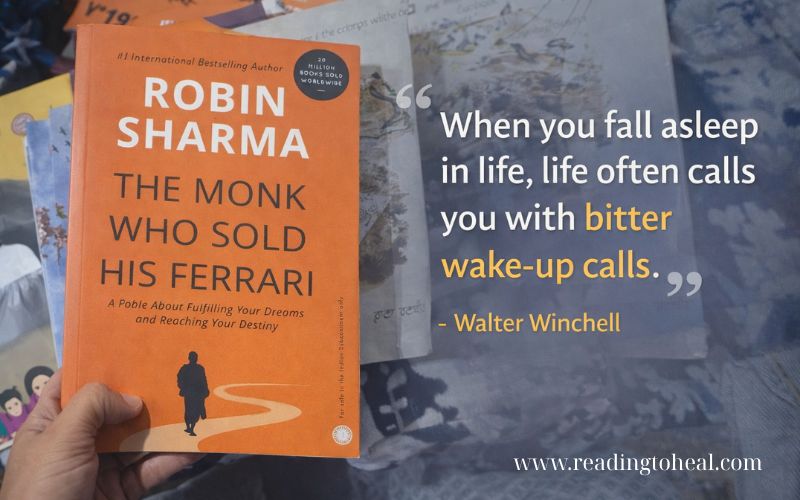
And indeed, if a person keeps trudging forward with an empty shell, sooner or later, he will need to receive a wake-up call from life.
Julian collapsed from a heart attack right in the middle of a crowded courtroom. This near-death experience made Julian wake up. He realized that what he endured was not just a heart attack, but the shattering of the core values within him.
He had traded the wealth of his soul for a massive bank account and the illusory satisfaction of a "live fast, die young" lifestyle for decades. Therefore, he decided to quit his job as a lawyer, sell his mansion, private jet, private island, and even his beloved Ferrari.
Shedding the shell that made up his polished past on the outside and misery on the inside, he decided to live a simpler life, leaving behind the hustle and bustle to find his soul in Sivana, India - where the sages hidden in the high mountains helped him find his inner strength and guided him on the path to fulfilling his mission.
From a person with a dry, barren soul and an old, overweight appearance, Julian seemed to transform into a healthy young man full of vitality. All the lessons the author sends to readers through the character Julian are actually the lessons the author wants to send to himself once again, for that was also the path the author walked before reaching his passion for writing.
Never Let the Inner Fire Flicker
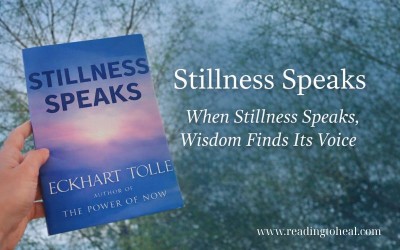
In today's life, everything is developing like a storm. Most of us blend into a pace so hurried that silence seems to have become something too strange, even making people uncomfortable and frustrated. This is something another author, Eckhart Tolle, also mentioned in the famous book Stillness Speaks.
Look Within
If lying on the grass watching the sky or walking barefoot in the rain makes you think "that's crazy, I'm not that free," then perhaps we are too busy in our minds with life plans, closing our hearts and telling them: "Silence is your only power."
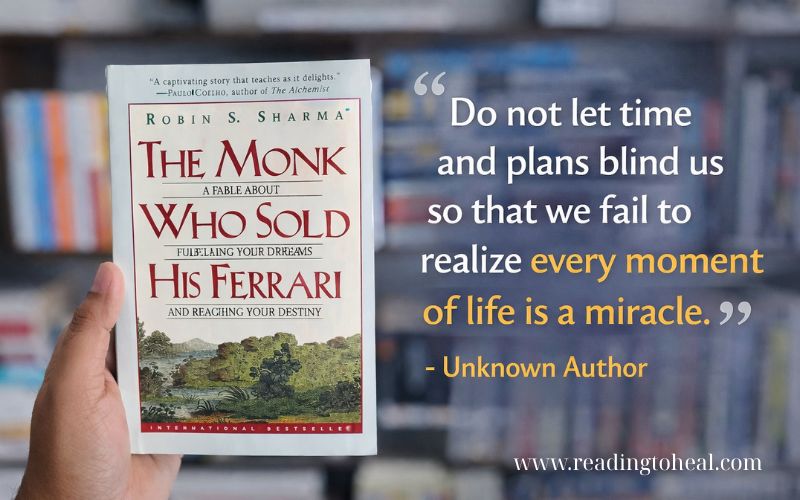
An English novelist once said:
"Do not let time and plans blind us so that we fail to realize every moment of life is a miracle."
Our minds are always too busy with all kinds of worries about work and life. Many people seem to be swallowed by endless worries about the future, dragging themselves home every day in an exhausted state but still obsessively haunted by material goals.
Julian was once like that; he even sneered at all those who were trying to improve their external and inner lives. It is not surprising because, as the author Osho once said: "Without the contrast like white chalk on a blackboard, we cannot recognize the writing on it." When we are too abundant on the outside, we realize the emptiness and lack of the inner self and begin to search.
But through the character Julian, the author wants to remind each of us: Do not wait until your life is out of balance, and especially never wait until the wake-up call falls on your head to face your own inner self.
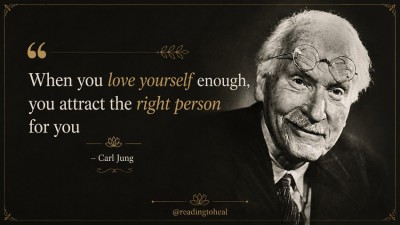
All external success will be meaningless if we lack inner success. Psychologist Carl Jung once said:
"Your vision will become clear only when you can look into your own heart. Who looks outside, dreams; who looks inside, awakes."
Look within to observe your own mind. Your mind is a vast garden; if you care for it and nurture it sufficiently, flowers will bloom. Conversely, if you let weeds take root and multiply at will, the peace in your mind will be disturbed, and your inner self will always be insecure.
To Understand Oneself is Enlightenment
Did you know that on average, you have about 60,000 different thoughts a day? The most terrible truth is that up to 95% of today's thoughts are identical to yesterday's thoughts.
It is no exaggeration to say that if you control your mind, you will control your life. As Winston Churchill once said:
"The price of greatness is responsibility over each of your thoughts."
Do not let worry, insecurity, remorse over the past, or contemplations of the future destroy your inner world and rob you of the right to master your own life. Throughout our lives, there will be only one thing we can completely control: our own minds.
Traffic, weather, emotions, and the behavior of those around us are things we cannot control; we can only control our own attitude toward them.
Optimistic and successful people in life are not successful because they are always lucky, but because they always focus only on what they can control in life.
If the mind does not waver and the inner self is resilient, then even a tragedy for others will become an endless opportunity for them. Become a gatekeeper for your own mind and always remember: Understanding others is cleverness, but understanding oneself is true wisdom and enlightenment.
Overcoming Limits to Find Your Life's Mission
There is a saying:
"If you find your main goal in life or your mission, you will never have to work another day in your life."
Discover Your Mission
Buckminster Fuller once said: "Every child is born a genius, but unfortunately, 99,999 out of 100,000 children lose their talent quickly as they grow up." Each of us has our own strengths; these strengths are the tools for us to fulfill our life's mission. The most important point is that we must discover them.
But in today's society, when the weight of worrying about a basic life or the responsibility of carrying family, children, and parents as an adult makes a person's shoulders heavier, there is certainly no room left to think about one's passion and inherent power.
For most of us, it seems like something too far away.
We grew up in an education system where most are not encouraged to discover their true power, so when we mature, we share a common fate of constantly struggling with life - first for survival, then for finding happiness.
Remember that you were not born to struggle with life. If you keep accepting a lifetime of spinning in the cycle of survival and let yourself be increasingly drowned in it, the end of life will surely be a regret for not having tried to live differently.
Overcoming the Fear of Change
All research has also shown that: for things we did wrong or did not do well, we will soon forget. However, for things we did not do, we will still live in regret for a very, very long time.
Therefore, when we have only one life to live, be bold and embark on everything you truly want to do, your passions and your strengths, so that no matter the result, we will never regret that we never took the first steps.
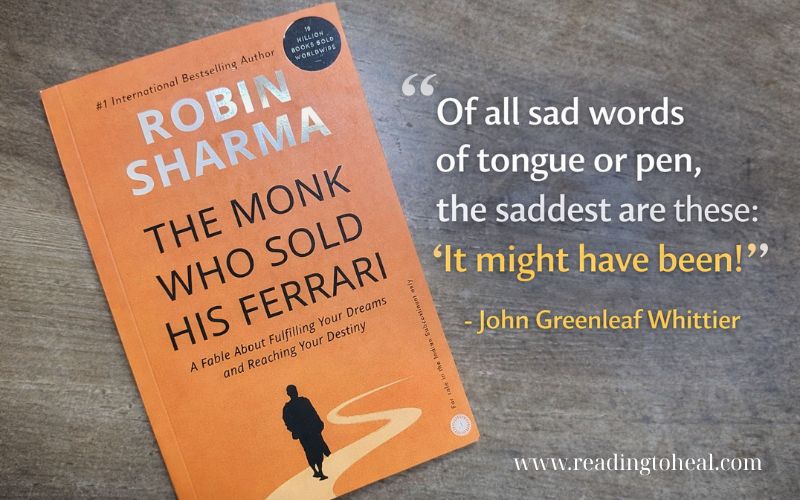
John Greenleaf Whittier wrote:
"Of all sad words of tongue or pen, the saddest are these: 'It might have been!'"
Do not let everything finally be uttered with those words. Always remember that it is never too late to start everything over.
Actually, we all have a deep fear within us: the fear of change and the fear of the risks ahead.
But the philosopher Aristotle would tell you that most of us are more afraid in our imagination than in reality. Pursuing your passion is not impossible but entirely possible, even if the struggle for survival is occupying your mind. Taking calculated risks to start the first steps, you can see the second path for yourself.
Lao Tzu once said: "A journey of a thousand miles begins with a single step." If you never take the first step, the dream will forever be far away. And always remember that life has no mistakes, only lessons.
Most importantly, you must always understand yourself: understand your strengths, weaknesses, expectations, and passions. Always remember that the only limits in life are the ones you set for yourself. When you courageously step out of your comfort zone to explore things you do not know, that is when you begin to release the true potential within you.
Sit down and truly reflect deeply on what prevents you from having the life you truly desire. Identify your weaknesses and give yourself the strength to confront them.
Are you afraid of crowds? Do not hesitate to use all your courage to allow yourself to take every opportunity to blend into the crowd. If you fear you don't have enough time to learn a foreign language, remember that this is just the discouraging voice of the mind; you never lack time to learn a language.
Do not let the fear of the monster created by the mind defeat your ability to try. Nor should you ever delude yourself that you are too young and have plenty of time, or that you are too old, too poor, or too rich to do something. No luck will come when you have not prepared your spirit to receive it.
Each of us has a mission of our own. Martin Luther King's mission was to fight for equality for all people. Gandhi's mission was to liberate 300 million Indians. Mother Teresa's mission was to bring food and clothing to the hungry and suffering.
They were extraordinary people, while we - ordinary people - do not need to do great things or change the world to be called fulfilling a mission.
Educator Marian Wright Edelman once said:
"Most of us will never do great things, but we can do small things in a great way."
The purpose of life is a life of purpose.
Write Down Your Life Goals
There is a saying: "Everything in the world happens twice: first in your mind and second in real life."
We often spend our whole lives wishing we would be happier and more successful, but we do not see the importance of spending time writing down our goals and thinking deeply about the meaning of our lives, so life keeps moving forward in ambiguity and uncertainty.
Therefore, the author of The Monk Who Sold His Ferrari advises us that anyone who wants to improve the quality of life, both internally and externally, needs to take out a piece of paper to start writing down their life goals.
Doing this means you are sending a red flag to your subconscious that these are the most important thoughts compared to the rest of the thoughts in my mind right now. The mind will start searching for all opportunities to realize your destiny.
It will be like a guided missile heading straight for the target. Setting goals is drawing a lighthouse for yourself to help you never be distracted or lost. Once you have goals to aim for, create positive pressure for yourself to accelerate the process to the finish line.
Goals are not just about material things, money, or property; they are also inner goals such as intellect, physical health, and spirit. When you can direct yourself toward inner goals, you will gradually open the door to uncovering your strengths and potential to embark on your own mission path.
And finally, always have a progress tracker for yourself and, most importantly, always enjoy the process.
The sages at Sivana believe:
A day without laughter, without love, is a day without life.
No matter how arduous the journey to conquer goals may be, always dare to live every moment fully with a fire in your eyes and joy in your heart.
Edmund Hillary - the first person to conquer Mount Everest - once stated: "It is not the mountain we conquer, but ourselves."
In the end, it is still only the journey of conquering oneself, so the fun will always lie in the process you travel. Do not just fixate on the final result, but enjoy every step on the journey as you conquer those goals.
Everything else has already been arranged by the universe.
The More Disciplined, The Freer
Philosopher Epictetus once asserted:
"No man is free who is not master of himself."
When you can control yourself, you will have freedom. Because freedom is not doing whatever you want, but the ability to control yourself to not do things you do not want to do.
We often think discipline will bind us and lead to a lack of freedom, but above all, it is the virtue of discipline that brings freedom to a person. All those who are undisciplined are slaves to erratic moods, cravings, and passions.
Albert Gray spent his whole life discovering and concluded that: All successful people have the habit of doing things that failures do not like to do. It's not because they like doing those things, but because their dislike is subdued by the power of their goal-oriented nature. That is the core, the power of discipline within them.
If we do not want to sacrifice present ease and pleasure to discipline ourselves, then we can only talk about success and happiness like a blind person talking about colors. The power of discipline is like a cable: inside it consists of many thin, easily broken wires, but when layered and combined, they are extremely sturdy and tight.
Similarly, many small actions when performed regularly will stack up to create a massive source of inner strength. As the proverb goes: "When spider webs unite, they can tie up a lion."
📚 Related Reading
The idea that discipline creates freedom is a central theme in The Monk Who Sold His Ferrari. If you’d like to explore how small daily habits can build that discipline in real life, read our summary of Atomic Habits: Control Your Habits, Control Your Life .
10 Rituals for Building a Strong Inner Self in The Monk Who Sold His Ferrari
The author of The Monk Who Sold His Ferrari affirms:
All success starts from within.
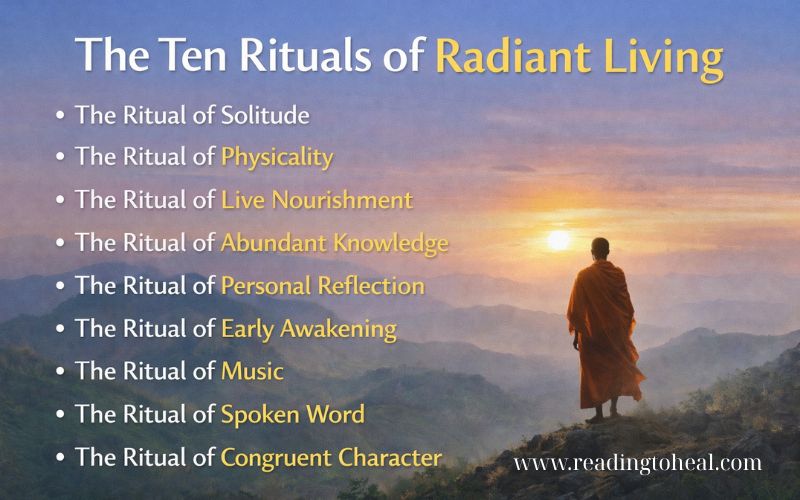
Health, finances, relationships, or anything external begins and develops in accordance with the strength of the inner world. Constantly developing oneself is the way we nourish our own inner world. In this book, author Robin Sharma guides us through The Ten Rituals of Radiant Living to help you achieve extraordinary things:
-
The Ritual of Solitude: Create a quiet time to immerse yourself in the beauty of silence. It is like a rest stop for your soul. Immerse yourself in nature, care for plants, or breathe fresh air in the early morning to connect with the source of inner peace.
-
The Ritual of Physicality: You cannot have a healthy mind in a weak body. Breathing correctly is living correctly. Spend time practicing deep breathing every day.
-
The Ritual of Live Nourishment: A diet high in grease and sugar will drain energy. The best food is "live" food like vegetables, fresh fruits, and grains. Limit animal protein to the minimum.
-
The Ritual of Abundant Knowledge: The more you learn continuously, the smoother your work becomes. Spend at least 30 minutes a day reading selected books.
-
The Ritual of Personal Reflection: The habit of self-examination is extremely important. Every evening, reflect on the entire day to improve yourself further tomorrow.
-
The Ritual of Early Awakening: Waking up with the first rays of sun awakens the source of life. To wake up early, you need quality sleep. Avoid negative news or friction before sleep. Wake up with a smile and gratitude.
-
The Ritual of Music: Music soothes the soul. Do not let your soul become a barren and lifeless land.
-
The Ritual of Spoken Word: Self-awareness and using positive words are extremely important. If you perceive yourself as confident, your actions will move toward those qualities.
-
The Ritual of Congruent Character: A person cannot live well in one aspect while acting wrongly in others. Have your own principles such as diligence, compassion, humility, honesty...
-
The Ritual of Simplicity: Learning to live simply is learning to live with inner joy rather than joy coming from the outside world. You will always have peace without depending on anything.
Don’t Live as if You Will Never Die
In our twenties, we often think death is something for others. In middle age, we accept the fact we cannot live forever but still hope to live a few more decades.
We constantly waste time on unimportant things. When we look back, youth has passed and we are still precarious. There is a saying:
"If only youth could know, and if only old age could do."
Life will pass in a series of regrets if you do not know how to use time properly.
Being ordinary or extraordinary is determined by how you use your own time. Do not let work swallow you, but also do not let pleasures distract you from your goals. Prioritize doing the most important things first because 80% of results come from 20% of important tasks. Learn to say no to things that are not truly important and people who do not value time.
Think of the good books you promised to read last year, the language learning plans left open, and the loved ones waiting for you at dinner. Do not let procrastination take away a valuable life in exchange for empty values. Do not live as if you have 500 years to exist. Cherish every moment as if it were the last.
Live fully in the present. The past is like water under the bridge, the future like the sun on the distant horizon. Live for today because every day is unique. Happiness is the path you travel; do not let the destination prevent you from enjoying happiness in the present.
The Ultimate Meaning of a Human Life
When a person lacks the passion to seek and use their own voice to serve noble purposes, the void in their soul will be filled with feelings of insecurity and social patterns.
-
The adventure of life is learning.
-
The purpose of life is growing.
-
The nature of life is changing.
-
The challenge of life is overcoming.
-
The essence of life is caring.
-
The opportunity of life is serving.
-
The secret of life is daring.
-
The flavor of life is helping.
-
The beauty of life is giving.
Living kindly and giving more, being ready to help others unconditionally, is the ultimate noble meaning. Inquiries, warm care, and small gifts of gratitude all bring complete meaning to your life.
Do not worry about what the world needs; ask yourself what you need to be full of life and do that. Because what the world needs are people full of enthusiasm who love what they do. Live for the present and fan the flame of your life. May you always be full of enthusiasm in your soul, clarity in your mind, and courage to embark on the path of your own mission - that is the message from the book The Monk Who Sold His Ferrari.