Atomic Habits: Control Your Habits, Control Your Life
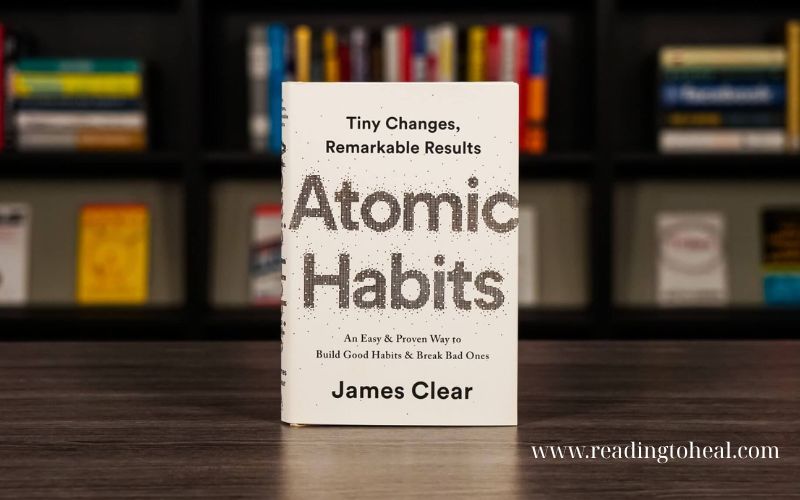
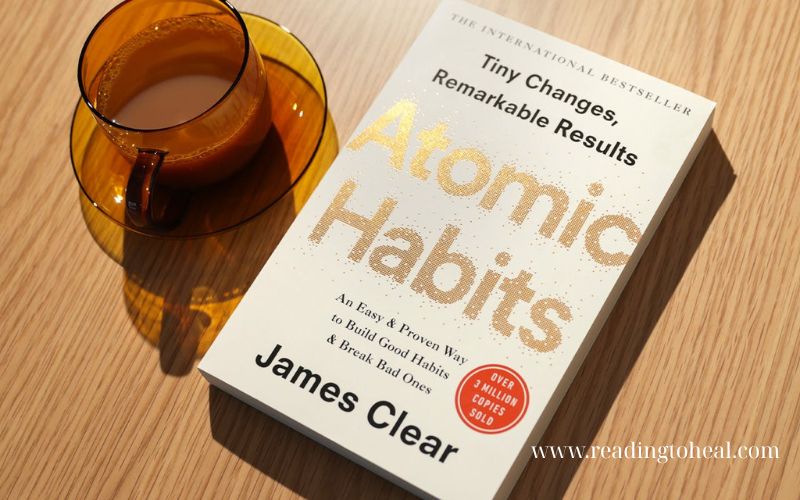
Building and maintaining habits is not a new topic, and the book Atomic Habits by James Clear is likely familiar to many.
Before reading this book, Reading To Heal was aware of many similar books on habit formation. Some discuss habit-building from a psychological perspective or summarize practical technical tips, but Atomic Habits is fresh in the way the author delivers his message through tightly argued, practical, and more concise reasoning.
Specifically, the most core value I perceived is the author telling us something very important: Changing yourself is about changing your identity. Instead of controlling yourself through willpower to maintain a habit, it is better to change from the inside out.
The Power of the Compound Interest of Small Changes
“Sow an act and you reap a habit; sow a habit and you reap a character; sow a character and you reap a destiny.” - William James
Good habits will build your life, yet we often turn a blind eye to small changes. We ignore them because we often convince ourselves that massive success requires action on a massive scale. Consequently, many people overlook the value of small daily improvements and end up procrastinating time and time again.
An even more fatal blow is that we often lose our persistence because we do not fully understand the enormous latent value that comes from incremental changes. But these small things are exactly how we create compound interest.
In Atomic Habits, a formula is mentioned: If you can get 1% better each day for one year, you will end up 37 times better by the time you are done. Conversely, if you get 1% worse each day for one year, your current capability will decline nearly to zero.
Many people view this as a mechanical calculation, but I hope you will set that aside for a moment and verify this formula for yourself. When we have not yet started to change anything, concluding too early is merely an excuse.
Small changes can create surprising effectiveness because maintaining habits is about creating compound interest for your own life. Look at this chart of the "Plateau of Latent Potential": When doing something, we often idealize our actions, assuming the goal is a linear path upward because we always expect immediate results. But in reality, implementing a good habit is a curve.
In the early stages of adjusting a habit, you will see this curve initially dip downward. At this point, when no significant difference is visible, people often feel discouraged and doubt whether the efforts they have put in are worth it. This downward curve is nothing less than the "Valley of Disappointment," where many people fall and give up halfway.
However, at this moment, you must believe that once you can persistently break through the critical point, the results will certainly appear. This is a common characteristic of any compounding process: The most powerful results are always delayed.
Changing habits is like a Chinese bamboo tree: During the first 5 years, no matter how ideal the environment, we can hardly feel it growing. But after 5 years, like a miracle, it begins to grow at a rate of 30cm per day and can reach a height of 27m after 6 weeks.
It turns out those 5 years were the time the bamboo was accumulating potential. During that period, the bamboo grew its roots deep into the ground, just waiting for the day to soar high. In truth, the deeper the roots, the larger the tree; with such a change, how could one not become a great talent? Therefore, live like a Chinese bamboo tree; always remember that no matter how small a change is, it has value.
The Foundation
Is your brain ready for new habits?
Good habits are much easier to form when your brain is in a "Green State." Explore how to reprogram your neural circuits with Dr. Rick Hanson.
Reprogram your brain now →Focus on Systems Instead of Goals
According to the author of Atomic Habits, if you only aim at the destination, you will fail. If you only look at the desired result, mentally, it is no different from locking yourself into a narrow perspective.
All the potential within any goal contains a fantasy: "Once I reach the goal, I will be happy." This perspective is like a shackle; it causes you to delay joy. But when you reach it, you certainly won't be truly happy; sometimes, it is replaced by a strange sense of emptiness because you are already hoping for the next milestone.
When you stare at a specific goal, the motivation within you is "I must achieve that," and this motivation pushes you forward. But once you reach the finish line, this fire of motivation will also vanish.
That is why many people return to their old state and old habits once they have completed a set goal. You must remember that practicing a habit is not about aiming for a goal to win at all costs, but about building a system of habits with cycles that become prevalent gradually and continuously.
The best way to maintain your spirit, according to James Clear, is to focus on the process, to focus on the present. You don't need to save up happiness; you will be truly happy right now and throughout the process of maintaining that habit. This spirit will certainly make it easier for you to be persistent and resilient.
The Secret to Maintaining Habits: Changing Identity
Next, James Clear states that the secret to maintaining habits is knowing your identity. According to research, behind every system of actions is a system of beliefs, and behavior that is inconsistent with identity will not last long.
What does this mean? Before you want to do something, let your belief become that person. That is, before performing a habit, you must identify who you want to become. Your belief about who you are will decide your behavior. The stronger the belief, the more consistently the behavior will be repeated; and the more the behavior is repeated, the more the belief will be reinforced, and your identity will become clearer.
This is a sustainable and long-term growth cycle. For example, if you want to maintain a running habit, you need to define your identity as an athlete. When you want to read more to write books or content, you must consider yourself a creator. If you don't know yourself before acting, you will only do it superficially, or find it difficult and forced during the process. Therefore, remember that habits are the way you embody who you are.
From this perspective, let us use reverse thinking for a moment to realize one thing: we must stop labeling ourselves or others. For example, parents often label their children as "lazy," "careless," or "playful" whenever they see them watching TV. These labels act like a prophecy, and if you keep labeling repeatedly like that, they can come true.
Mastering the Pendulum of Desire
Atomic Habits help us control the "Dopamine Loop," a modern version of what Schopenhauer called the Pendulum of Pain and Boredom. See how his philosophy provides the "Why" behind your daily "How."
Read the Philosophical Foundation →The 4-Step Logic of Habit Formation
In the next section, the author of Atomic Habits will guide us to clearly understand how a habit operates before we act. Specifically, follow these 4 steps: Cue, Craving, Response, and Reward.
- Cue: When you hear the notification sound of a Facebook message, this is the cue.
- Craving: You immediately want to know who messaged you; this is the craving.
- Response: Then you reach out your hand to pick up the phone and open the message; this is the response.
- Reward: Finally, when you finish reading the message, you know what they want to say; this has satisfied your need, and that is the reward.
Almost every action in our daily lives is based on this 4-step principle. It is scary in that once it starts operating, it cannot be stopped. For example, you tell yourself you will read 20 pages tonight, but as soon as you sit on the sofa, you immediately pick up your phone, lie down, open Facebook, and scroll through TikTok. These actions are a chain of behaviors in a habit routine you formed previously; they cause you not to think at all, just to act automatically. Thus, you must understand this principle to overcome bad habits and build good ones.
4 Steps to Accurate Action
If you have accidentally fallen into the error above, do not blame yourself anymore. Because every mistake can be forgiven, and according to the author of Atomic Habits, you have 4 steps to take action.
Step 1: Make it Obvious
The strongest human sense is sight; it accounts for 90% of the body's total sensory capacity. If you want to develop a reading habit but the books are tucked away in a corner, how can you develop it?
The way to make a habit an essential part of life is to make it frequently appear before your eyes. Place books in all the places where they can be seen and easily reached: on the sofa, on the TV shelf, on the head of the bed. This principle is similar to changing bad habits; you must eliminate the "triggers." For example, instead of leaving sweets at the office, place fruits and nutritious nuts in visible places. When there is no clear reminder, the behavior will not be easily triggered, and bad habits will gradually be phased out.
Step 2: Make it Irresistible
According to author James Clear, there is an important formula: Habit stacking and temptation bundling.
Habit stacking: After a current habit, I will perform a habit I need to change. For example: After drinking this cup of coffee, I will read for one hour.
Temptation bundling: Following a habit I need, I will do a habit I want. For example: You are lazy at journaling but love taking photos; take a beautiful photo and then write a few lines with it.
Additionally, leverage the power of the group. Join a running group or a group with similar interests. When you are in a collective, you will tend to be more diligent and positive.
Step 3: Make it Easy
The biggest principle, according to James Clear, is to reduce the difficulty. If you want to go to the gym, go to the one closest to your house instead of over-comparing which gym is cheaper or better. Especially, maintain the 2-Minute Rule: When starting a new habit, it should take less than 2 minutes to do. Instead of forcing yourself to read for an hour, start by reading 1 to 2 pages. The first running session should just be walking to get your feet used to it! The meaning of this rule is that no matter what, you must let yourself take the first tiny step. Conversely, if you want to quit a bad habit, you must create obstacles, such as uninstalling all the time-wasting apps on your phone.
Step 4: Make the Habit Satisfying
According to the author of Atomic Habits, bad habits are hard to fix because they provide immediate pleasure. A bad habit brings instant joy, but the later consequences are terrible; good habits are the opposite. To have a good habit, you need to add a bit of immediate happiness to the process. An effective way is habit tracking: Take a habit tracker, stick it on the wall, and mark it as completed every time you finish. This is simple, but it is a process of rewarding the spirit.
There are two things to emphasize:
- Persist through the struggle rather than giving up. Never miss twice in a row because that is the start of a bad habit.
- Don't let the measurement become your goal. If you only do it for the sake of finishing the tracking sheet, it will be meaningless. Don't live just to focus on the goal.
Important Reminders from Atomic Habits
There are many valuable messages from Atomic Habits. According to Reading To Heal, it can be summarized in a few points:
First, the entire book emphasizes a core point: building habits is a daily accumulation; it is a compounding process and a persistent investment of time. Because time is finite, you need to discover the direction in which you are skilled: "Do things that you find interesting but others find tedious." The sign that you are suited for something is whether you can endure the hardships of that task more easily than most people. Others feel suffering, but you find it manageable; it doesn't challenge you, or you feel very much in enjoyment while doing it.
Second, do not rely too much on habits. Sometimes making a task natural can result in mediocrity. Being too dependent on habits can prevent us from having breakthroughs. To avoid this, put yourself into deliberate practice. The highest state of deliberate practice is entering the state of "Flow" (from the book Flow by Mihaly Csikszentmihalyi). Flow is not a habit; Flow is what you need to focus on absolutely to do even better and gradually become a master.
The final point is that we need to frequently reflect and review ourselves; do not let your identity "kidnap" you. If you rely too much on beliefs and personal identity when forming habits, you will feel extremely lost, disappointed, and weak when they are not achieved.
In conclusion, the most valuable message of Atomic Habits is: These tiny habits will not simply add up; they have a multiplying relationship, stacking upon one another and eventually creating a synergistic effect that completely changes your life. After forming a new habit, it will trigger a series of other positive habit changes.
For me personally, one wonderful habit I feel happy about is having formed the habit of reading. Through reading, I see that I "do not know yet" and realize surprising changes.
I wish all of us success in finding the leverage for our lives and using the habit-building system as a tool to make life more meaningful.
Deepen Your Transformation
Mastered your habits? Now, find the freedom to be yourself.
Building habits is about what you do. Finding happiness is about how you think. Explore our deep dive into the Adlerian philosophy of freedom.
Read: The Courage to Be Disliked →
For another inspiring perspective on discipline and purposeful living, explore the timeless lessons in The Monk Who Sold His Ferrari.