Hardwiring Happiness: Escaping the Negativity Trap and Rewiring Your Brain
For hundreds of millions of years, our brains evolved to prioritize the detection of danger. This negativity bias causes every painful memory, failure, or loss to stick tightly to our neurons, easily triggering anxiety and anger. This mechanism once saved our ancestors from predators, but today, it traps you in a vicious cycle of stress and unhappiness.
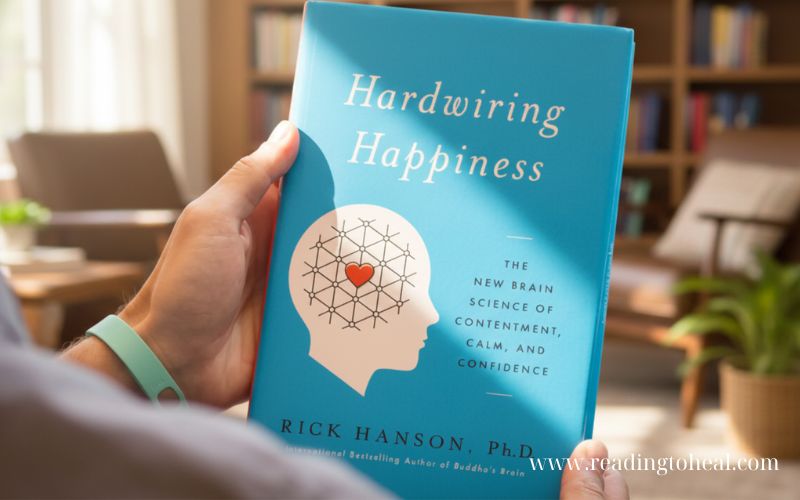
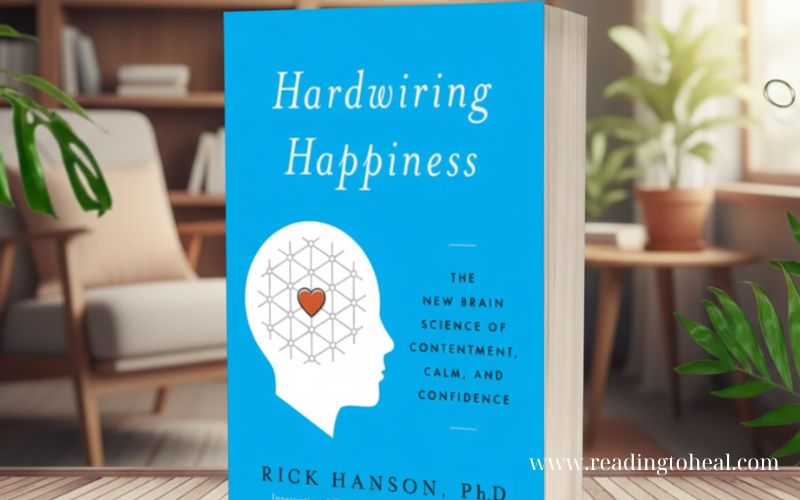
Dr. Rick Hanson, a renowned American neuropsychologist, combined neuroscience, positive psychology, and evolutionary biology to create the book I'm eager to share with you today: Hardwiring Happiness.
Through this book, he points out a hopeful truth: You can build a peaceful, resilient, and deeply contented soul to live a happy life by reprogramming your brain.
Perhaps you've heard about methods for cultivating happiness through Buddhist philosophy or psychology on the Reading To Heal Website, but today, with a brain-science perspective, we hope to help you discover a new path to steadily overcome anxiety, sadness, and truly experience authentic joy.
Why Does the Brain Need Reprogramming?
In the first part of Hardwiring Happiness, Dr. Rick Hanson explains why the "brain needs to be reprogrammed." In other words, from a scientist's point of view, he clarifies our understanding of the brain - the source of our worries, fears, and more.
Internal Strength
Living in this world, we face countless challenges, both external and internal. Scientists suggest that a person's ability to overcome difficulty depends on three factors:
-
• The difficulty level of the challenge.
-
• The level of vulnerability (i.e., how sensitive you are).
-
• Coping capacity (i.e., whether you have enough internal strength to face it).
Of these three factors, the third one, internal strength, is the most crucial. Dr. Rick Hanson suggests that about 1/3 of internal strength comes from genetics (qualities inherited in your parents' genes), while 2/3 is built through daily practice and accumulation.
If you don't know how to cultivate inner strength, you might miss out, letting the current of life sweep you away and leaving everything to fate. Conversely, when you understand how to practice your internal strength, you will live a happy and peaceful life.
Neuroplasticity
So, how do you practice? From the perspective of brain science, Dr. Rick Hanson suggests a practical method: rewiring the brain through training its neuroplasticity.
This term may sound complex, but simply understood, it is the nervous system's ability to adapt. Our brains have countless neurons connecting to form a network of neural circuits. These circuits shape how you react to events.
For example, a student starts to feel stressed the moment they hear the word "test." That's because their neural circuit already has a wire leading to an anxious state when this topic is mentioned. What we need to train is the ability to change the reaction of that neural circuit.
Research indicates that neuroplasticity depends on experience. The author notes: "In fact, what you focus your attention on is what shapes your brain."
Each person has a tendency to focus on different things, depending on their interests and the experiences deeply imprinted in their mind.
-
People who like making money are especially attracted to high-profit business models.
-
Gossip lovers can hardly ignore any rumor because their brains are accustomed to focusing on social stimuli.
-
There are others who always feel insufficient, wanting to live healthily and long, so their brains often direct attention to bodily aches, reacting strongly whenever there's a sign of instability or illness.
And the more a neural circuit is attracted to something, the more you will experience that thing. The principle of survival of the fittest in neuroscience indicates that neural connections used frequently become stronger and more stable. The more you focus on something, the more you reinforce your connection to it, whether positive or negative.
For a broader psychological perspective on sustainable happiness, see Happier by Tal Ben-Shahar.
Explore the Philosophy Behind Rewiring Your Brain
Dr. Rick Hanson’s methods for escaping the negativity trap align perfectly with Arthur Schopenhauer’s timeless teachings on escaping suffering. Learn how this 19th-century philosopher pioneered the path to inner richness.
Read: The Wisdom of Arthur Schopenhauer →The Bad is Stronger Than the Good
However, the sad truth Dr. Rick Hanson mentions in Hardwiring Happiness is that for most of us, neural connections develop most strongly with negative experiences. This is due to a special protective mechanism in the brain called The Bad is Stronger Than the Good.
The brain is designed to help us survive. It prioritizes threat detection, emphasizes vigilance, and reacts quickly to danger. For instance, when you walk alone down a dark alley and feel like someone is following you, your brain immediately activates the alert system, putting you in a ready-to-defend state. However, this same protective mechanism causes the anxiety center (the amygdala) to be easily over-activated.
Example: In a day where 20 things happen, 19 go smoothly and happily, with only one causing you dissatisfaction. Yet, by evening, the thing you remember most clearly and worry about most before bed is often that single unpleasant incident. This is how the brain operates when the bad is prioritized for memory and processing.
Positive Experiences are Forgotten
Not only is the brain biased toward the bad, but the structure of memory also contributes to us being easily drawn into negative experiences rather than positive ones. Essentially, according to the author of Hardwiring Happiness, the brain operates based on two main forms of memory:
-
Explicit Memory: Memories we can consciously recall and express verbally (like memorizing a poem, recounting a trip).
-
Implicit Memory: Formed silently from experiences that leave a strong emotional imprint, often hard to recognize or name.
This second type of memory tends to lean toward the negative. Things that cause injury, threat, or pain are often recorded deeper by the brain to protect us in the future. The combination of the negativity bias and the mechanism of repetition causes implicit memory to dominate, while positive experiences often remain faint.
Most human joy is transient, passive, and lightly recorded. For example, when you are complimented, the positive feeling exists only as temporary data in your cache. For it to transfer to long-term memory, you need to receive the compliment many times. However, no one compliments us forever. As a result, beautiful moments are easily forgotten, while sadness or fear remains deeply ingrained.
Consequences
This is why bad news travels fast, and sensational negative news or scandals always attract strong attention. It is also why many people, despite having experienced countless happy moments, easily take them for granted.
The consequence is that we are unhappy. We live in a state of prolonged anxiety, always feeling insecure. With the development of newspapers, television, the internet, and phones, your brain is almost constantly bombarded with a stream of information for 20 hours a day: how much money someone earned, how talented they are, which top schools others' children attend, how beautiful this outfit is, and so on. All of this contributes to the brain forming neural circuits.
Therefore, Dr. Rick Hanson writes in Hardwiring Happiness that it's rare to see a high-income person who feels truly happy. Every day, we are surrounded by external pressures, accumulating more and more stress hormones in the body. That's why so many people today suffer from problems like anxiety, depression, bipolar disorder, claustrophobia, etc.
The Brain's Two States: Green Light and Red Light
Scientifically, we know that the human brain consists of three main operating systems:
-
Core Center (Reptilian Brain): Controls basic needs like breathing.
-
Outer Part (Mammalian Brain): Processes emotions.
-
Farthest Part (Primate Brain): Logical thinking.
These three systems respond to three core human needs: Safety, Satisfaction, and Social Connection. From this, the brain forms two states with two modes:
- 🟢 Green State: Corresponds to the Adaptive Mode.
- 🔴 Red State: Corresponds to the Reactive Mode.
Green Light State
If the brain's neural circuits are consistently maintained in the adaptive mode, the brain shifts to the Green State. When the brain is in this state, its three operating systems work in harmony. No matter what problem you encounter, you can easily feel safe, satisfied, and connected.
Example: Driving to work in the morning, a car suddenly cuts you off and speeds ahead. At this moment, you simply smile lightly: "Maybe they're in a hurry, enjoy life." When you arrive at the office, you accidentally knock over a cup of water just as you sit down. You calmly wipe it dry and think: "Good thing it wasn't coffee." And in the meeting, your boss points out some issues with your report. You carefully take notes and think to yourself: "This is an opportunity to improve."
This is the brain maintained in the Green State, meaning the neural circuits are always plastic, allowing them to adapt to unexpected situations, receiving them with calmness.
Red Light State
Conversely, if the day starts with anger over the reckless car, causing you to chase after it and shout, "Watch where you're going!" Then, when the water spills on your clothes, it frustrates you even more. Or when your boss criticizes you, you think: "What a terrible day." And after work, that anger might travel home with you, making you irritable with family, or causing you to blame yourself.
This is a chain of reactive modes that keeps the brain in the Red State. Sometimes someone says a normal sentence, but you feel intensely angry. According to Dr. Rick Hanson, difficulties in life and worsening relationships all stem from our brains staying too long in the Red Light State.
When in the Green State, your world is much more peaceful, and life improves because of it. Notably, the Green State triggers the release of endorphins. This substance has antibacterial, pain-relieving, and anti-inflammatory properties.
Medical research indicates that maintaining this state not only enhances overall health but also reduces the risk of illness, contributing to longevity. Conversely, the Red State causes the brain to overreact to negative stimuli, increasing stress.
Therefore, training neuroplasticity for the brain to be in the adaptive mode, frequently turning on the Green Light, is the key to a balanced, healthy, and happy life. So, specifically, how do you train the neural circuits? Let's explore the following section of Hardwiring Happiness with Reading To Heal!
The H.E.A.L. Method for Reprogramming the Brain
According to Dr. Rick Hanson, the way to reprogram the neural circuits to live happier is summarized by the four initials: H.E.A.L. (Have - Enrich - Absorb - Link).
H - Have: Have a Positive Experience
The letter H means to have a positive experience. So, how do you have one? Hardwiring Happiness suggests three ways:
1. Pay a Little More Attention
Neuroscientists point out that you should start with attention, or to make it easier to apply, by "paying a little more attention." There's a saying: "This world belongs not to the wealthy, nor to those with time, but to those who pay attention."
A person who pays attention to life around them, who knows how to stop and see, will have a whole world of good feelings. Kind actions require you to pay attention and explore.
Example: The sound of children laughing. Do you usually find it noisy? But now you pay attention and discover the pure innocence in that ringing laughter, and you feel pleasant, comfortable. Remember that feeling. That is paying attention.
Paying attention means you can see the positive side of everything, discover and enjoy the good from things that are normally mundane (a fluffy cloud, walking in the shade of trees, sunlight streaming through a window, a stranger's smile, a mother's warm hand). All these seemingly simple things suddenly become strangely beautiful and peaceful in your eyes. That is the process where paying attention begins to re-establish the brain's recordings.
2. Let it Flow Naturally
However, it's important to note that when experiencing a positive feeling, let it flow naturally, like a stream, as the author of Flow once said. Don't try to grasp it, and don't force yourself to always have it. Things that make you happy often come from a sense of liking, while pressure appears when you turn what you like into what you want.
Example: You see a beautiful handbag and really like it. But if you emphasize the need to own it at all costs, the happiness is gone. This doesn't mean you have to stop all material desire, but it's a reminder to let things happen gently as a balanced choice between feeling and capability.
3. Proactively Create Joy
The third step mentioned in Hardwiring Happiness is that, besides paying attention to positive things, you can proactively create them.
In fact, we don't need to be too complicated. Research shows that one of the simplest but most effective ways is to practice gratitude, starting with the small, ordinary things in daily life.
Have you ever proactively thanked the items you use? Like the laptop in front of you. You can take a moment to thank the people who invented, manufactured, and perfected this technology. Many people think: "I paid money for it, why should I be grateful?" It's that thought that cuts off the positive neural connections in the brain. When you view everything as merely an equivalent transaction, you will find it hard to feel true happiness.
You can also reframe past difficulties, finding the things that helped you grow from everything that has happened. Additionally, act kindly and virtuously every day. For example, holding the door for the person behind you, giving up your seat for the elderly, children, or pregnant women, stopping to help someone who dropped their bicycle, guiding a blind person across the street, or simply offering a smile. An old saying goes: Nhật hành nhất thiện (Perform one good deed daily). If you maintain this habit, your heart will become lighter and brighter.
Finally, view life as full of opportunities. If you see life everywhere as an opportunity to enjoy and experience, you will find that every moment has something valuable, every challenge is an opportunity to practice yourself, making your mind increasingly peaceful and your inner self stronger.
E - Enrich: Enrich the Positive Experience
Next, you need E - Enrich, meaning to enrich that positive experience for the brain. For example, you look at a flower and feel relaxed. But if this experience only happens once or twice, you are still only at step one. These experiences will only enter the cache memory and gradually fade away. So, what needs to be done? According to Dr. Rick Hanson, you need to note four things:
Lengthen the Duration
The first thing to do to enrich the experience is to make it last longer. Repeat each experience 5 to 10 times, each time for 10 to 30 seconds. The problem is we are often too rushed, sometimes just glancing over, perhaps even not bothering to look. And if we do, we quickly take out our phone to snap a photo to post on social media without feeling it deeply. Therefore, many positive experiences quickly enter the brain's forgotten zone.
Increase Intensity (Deep Looking)
After lengthening the experience, we also need to increase the intensity of the feeling, meaning making the sensation bigger, richer, and more complete. I believe this is the ability to look deeply in mindfulness that Zen Master Thich Nhat Hanh also mentioned.
Example: When drinking a glass of lemonade. Looking deeply into it, you will see the sunlight nourishing the lemon tree, Mother Earth diligently transferring minerals, the rain and wind washing each leaf, the farmer's hands meticulously picking each fruit... And you also see yourself, a person who worked hard for the money earned, bought the lemons, and is enjoying this sour taste. The lemonade enters and purifies your body, providing energy to live more virtuously. You realize that in that seemingly small glass of lemonade, there is the power of all things collaborating, harmonizing, and you are a piece in the vast tapestry of life. Happiness and a feeling of sufficiency, along with natural gratitude, will flow, not because you have something grand, but because you see the richness and abundance that has always been present.
Increase Variety (Awaken the Senses)
Next, according to the author of Hardwiring Happiness, you also need to increase the variety in your ability to perceive. Awaken all your senses: sight, smell, taste, hearing, and touch, to bring good feelings to you.
Example: Try closing your eyes, hugging a tree, feeling the silent rhythm of life transferring from the cracked bark into your hands. If possible, take off the shoes covering your feet, let your bare feet touch the ground, feeling Mother Earth with every breath. Your ears hear the wind rustling through the leaves, your nose breathes in the faint scent of flowers and leaves. At that moment, you will feel a gentle balance returning to your mind and body.
Stimulate Novelty (Curiosity)
And finally, stimulate novelty, meaning maintaining curiosity, exploring new things, and never stopping learning. These are all things that help the brain's hippocampus develop and continuously produce new cells.
A - Absorb: Absorb the Positive Feeling
If step one (Have) is like kindling an emotional fire, and step two (Enrich) means keeping that fire burning longer, now you need step three: Absorbing that fire. Absorbing is like letting that warmth soak into your skin, penetrate your heart, and become a part of you. So, what should be absorbed? It is peace, contentment, and love from the good things around you. Simply put, if you feel peace, satisfaction, and love through an experience, the absorption process is taking place. A positive experience doesn't just stop at pleasantness; it is percolation, allowing that healthy energy to seep deeply into the mind and remain.
Example Case: A case from Hardwiring Happiness that the author tells: A girl had a cat that became very ill. The vet advised that the best way was to let the cat go peacefully. The owner cried loudly in extreme pain, but she ultimately accepted the truth by holding the cat, stroking it, and remembering every beautiful moment when the cat was young, when it played, when it curiously looked at everything. She had to remember the days it had accompanied her. That inner love helped her truly say goodbye to the cat in peace. This is the process of absorbing and percolating positive feelings from good memories so that love fills the void of loss.
So, how do you know if you have truly absorbed it? By returning to observe yourself sincerely and regularly. The brain will always shape itself based on what you experience. You will become what you absorb. If you absorb an experience of gratitude, see if you truly become more grateful, forgiving, and compassionate. If you absorb an experience of courage and strength, see if you become stronger. The sign of deep absorption is a quiet but clear change within you. The more positive energy you absorb, the more flexible and stable the neural networks in your brain become. Then, negative reactions, the Red State, will find it difficult to intrude, because the positive foundation within you is strong enough to support you through life's bumps.
L - Link: Link Positive and Negative Material
The final step in the brain reprogramming process mentioned by the author of Hardwiring Happiness is L – Link, which means connecting. This is the deepest transformation step, where you use positive experiences to replace and reframe negative memory areas in the brain.
As humans, we all harbor pain. Whether you try to forget it or don't want to remember, it silently exists like weeds in your mind. The important thing is that instead of trying to pull them out or suppress them, you learn to plant new flowers. This method doesn't ask you to forget the past, but invites you to enter it with a new state of mind, richer in light and forgiveness.
Example Case: The example case in the book is of a man who, instead of eternally tormenting himself with the memory of being abandoned by his mother as a child, linked the pain with the image of a serene lake. Every time he walked and gazed at it, he saw an image symbolizing acceptance and letting go. Over time, whenever the old memory surfaced, it was no longer just a wound, but also carried a feeling of lightness, like water reflecting the sun. That is how the brain learns a new, healthier, gentler, and more peaceful reaction.
However, this is a process that requires inner resilience. You can only link painful memories with a positive energy when you are strong enough, so that the light is not swallowed by the darkness. Otherwise, you will only feel sadder. Therefore, if the wound within you is too deep, you can seek the companionship of a therapist to safely perform this step four.
The Profound Message from Hardwiring Happiness
Thus, following the flow of Hardwiring Happiness, you will explore all four important steps in the journey of reprogramming the brain. If you've ever wondered how to live happier and more peacefully, the answer is not in the external world but right within your brain. The way you train it daily, from paying attention to positive moments, to proactively nurturing the Green State through your thinking, sensory activation, choice of reactions, and habit formation. All of this can change the structure of the nervous system, thereby also transforming the way you live this life.
Happiness is not a distant goal but a skill that can be learned. The brain is not a fixed entity but a fertile ground waiting for you to sow good seeds. And perhaps, the journey to reprogramming happiness begins the moment you choose to stop, observe gently, and be more courageous with life.
Finally, let me conclude with an inspiring quote from the author of this book, which deeply moved me:
Next Step: From Inner Peace to Daily Action
Once you understand how to reprogram your brain for happiness, the next challenge is to turn that mental strength into permanent behavior. While Dr. Rick Hanson helps you "install" the good, James Clear provides the system to make it automatic.