A New Earth: Reading to Transcend the Ego and Live Consciously Every Day
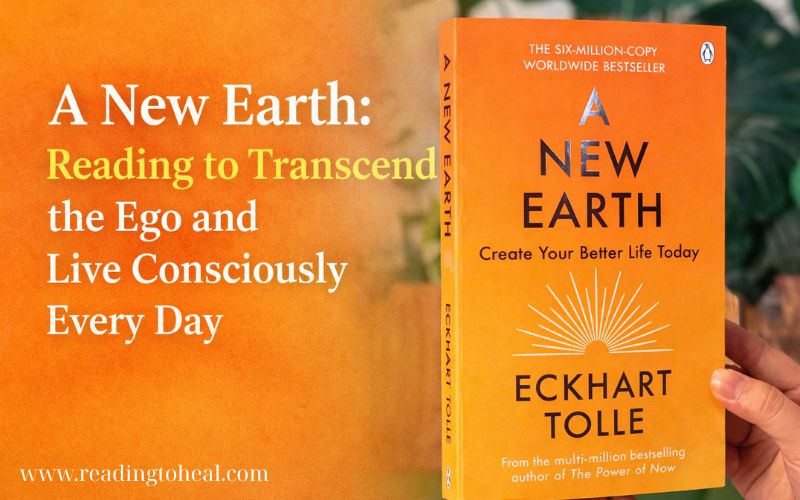
Author Eckhart Tolle is perhaps no stranger to many of us due to the fame of his book The Power of Now and Stillness Speaks. But few know that a man who has been passionate about and pursued philosophy since age 13 suffered from depression for most of his life until he was 29. Awakening came to him, completely changing his life, freeing him from depression, and making him one of the most famous spiritual teachers today.
If you find yourself in one of these situations, then 'A New Earth' by Eckhart Tolle is a book you truly should read. To get a quick glimpse into his profound wisdom, you can also explore our curated list of the 100 Best Eckhart Tolle Quotes to Awaken Your Consciousness.
THE EGO AND THE DRIVE OF OUTER PURPOSE
What drives the purposes of life? When asked who you are, how do you usually answer? Name, profession, or some other information, right?
We often use words to describe ourselves as well as others, but do all the answers to the above question truly depict the true essence of your being?
Are we merely the thoughts, feelings, experiences, and concepts that we set for ourselves?
The answer is no. These are just concepts that each person assigns to themselves to form an "I" that distinguishes you from others, also known as your Ego.
The ego is formed throughout each person's childhood years. It is when a child knows what their name is, knows how they feel, knows what belongs to them: parents, toys, their house. As an adult, the ego is further reinforced through gender, appearance, profession, qualifications, nationality, religion, and all notions of the past and orientations for the future.
Everything that a person can base their sense of worth on, a sense of "I" - this is the essence of the ego. And it is also the drive for the daily purposes of life, which the author calls the Outer Purpose.
Do you notice that the majority of a person's life purposes serve their own ego? Only concerned with material possession, trying to fill one's life by acquiring and owning objects. Even those who are so wealthy they have a material surplus still search for fragments of fleeting pleasure and self-gratification to prove their worth, a sense of affirmation that is nothing more than the affirmation of the ego.
The rise and unlimited control of the ego within you, identifying with the ego, is something seen as obvious and always strongly promoted in this modern society. You can encounter anywhere messages and advertisements aimed at driving an endless growth economy: "Must have more." This is a path of delusion, delusively identifying oneself with objects, with the body, with the intellect, with fame, and with power.
As Sadhguru once said: all thoughts, emotions, and every concept in your head is just a psychological drama, like clouds hiding the sun, causing you to live in your own pettiness.
And Einstein viewed identifying oneself with the ego as an optical illusion of consciousness.
|
Related Insight: The concepts of the ego and presence are best captured through Eckhart Tolle’s own words. To see how these ideas are expressed poetically, don't miss our collection of [33 Transformative Quotes from A New Earth]. |
FOUR FORMS OF EGOIC SELF-IDENTIFICATION
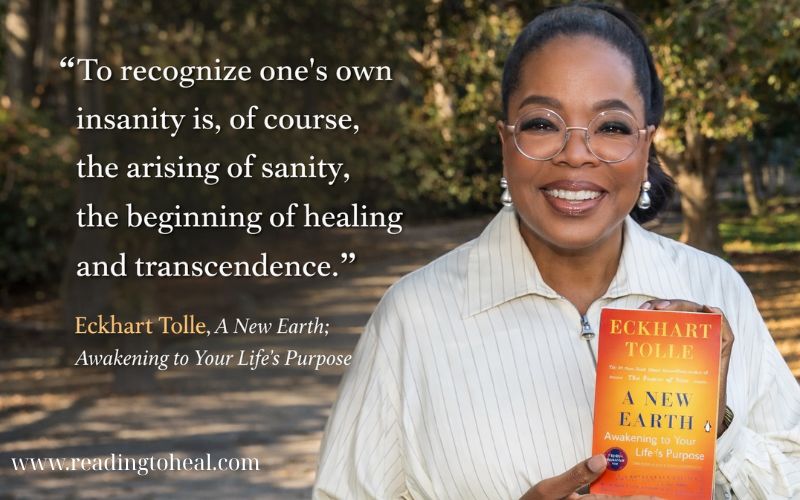
In the next part of A New Earth, Eckhart Tolle explains more clearly what the ego actually is and what we usually identify ourselves with.
Identifying oneself with objects
When a child loses a toy, they cry in sadness; whether that toy is a piece of wood or an expensive toy car, the suffering is the same. In reality, the child suffers not because they are attached to the toy, but because of their own thought that "the object is mine."
Throughout life's journey, with the same pattern, you will always identify yourself with objects and material wealth through the thought of "mine." This phone is mine, the house, the car, this bank card is also mine. Of course, all objects and properties are essential, and we all need to strive to own them: clothes, housing, vehicles, tools... But once you cross the limit of considering all material things as a means to reinforce the ego, your endless greed will create a painful end on the road ahead.
As the philosopher Socrates once said:
If you don't get what you want, you suffer. If you get what you don't want, you suffer. Even if you get exactly what you want, you still suffer because you cannot keep it forever.
Your mind is your difficulty. The more you try to find yourself in the material world, the greater your level of suffering will be when the material is lost.
So, some might ask, is it wrong for me to be proud of the assets I have? Or if my salary is low, is it wrong to feel inferior and inadequate? Actually, there is no right or wrong. What you truly need to understand is that whether it is pride or inferiority, it is just a characteristic of the ego. The ego is not something wrong, but merely a manifestation of unconscious delusion. As long as you live in a culture that largely equates a person's value with what and how much they own, and as long as you haven't clearly seen these collective illusions, you will waste your whole life pursuing vanities.
So how can one completely let go of attachment to the material? The author says this is impossible, but relatively speaking, if you no longer try to find yourself through those materials, the attachment gradually diminishes. Start by reducing the bondage of the material by being aware that you have an attachment to it. If you are sad, anxious, or suffering when losing an object or an asset, you will know that you are attached to it. Or if a feeling of inferiority arises within you when lacking certain material things, recognize this. This recognition is the first step for the process of transformation in your own consciousness.
Identifying oneself with the body
The first manifestation is identifying with our own gender. Identifying with gender often binds you to behavioral patterns formed and reinforced over many generations.
For example, you will always hear prejudices that men should not cry in public because it shows weakness. Expressing emotions is nothing to be ashamed of; suppressing emotions leading to senseless anger is what is truly frightening.
The second thing we often identify with the body is identification with physical appearance. Most of us search for our identity through the body's appearance, bound by physical beauty and looks. Some constantly cry out: "I'm too fat, I need to lose weight," while they are already too thin. Some constantly chase an ideal role model they patch together from everywhere onto their bodies in plastic surgery rooms. Some identify themselves with diseases or physical defects, using them as weapons to make others care for and favor them more.
Why do we look for ourselves through something we cannot choose? It is due to habit; we have identified ourselves with the rambling thoughts in our heads: "I am not satisfied with my body or my face," "Beauty will always be favored," "I am so unlucky to have such a modest height."
We are too busy comparing ourselves with others and then identifying ourselves with the outer shell, considering it the power to achieve certain goals. You need to remember that your body is ultimately just a manifestation of form. Inevitably, all forms must age and dissolve.
Do not find yourself through the body's appearance; do not bury yourself in inferiority about your looks, nor lose yourself in overconfidence about your outward appearance.
Let the inferiority about your appearance become the motivation to become superior. The most useful value you can freely choose for yourself is a rich, strong, and vibrant inner life. Stop identifying yourself with the body, but do not neglect, ignore, or destroy it either. Take care of it by improving nutrition and exercising, and simultaneously shift your focus from the outer form to the feeling of the inner aliveness. Deep within you is the power of the True Self, the immortal connected to the universe, which helps you fully experience a human life.
Identifying oneself with the intellect
Have you ever met people whom everyone considers "crazy" because they walk and talk to themselves, always mumbling certain words? The author says we are exactly like them, only we don't say it out loud, but we talk in our heads incessantly: criticizing, judging, disparaging, comparing, then feeling sad and fearful. This is how you identify with your own intellect.
You mistakenly believe that all the knowledge, experience, and values you have accumulated are what make you who you are. When identifying with the intellect, you face life through a lens full of concepts, labels, judgments, and hatred, making your life full of exhaustion.
Like a tape recorder that cannot find the "off" button, it is not just a reinforcement for the ego wanting to become superior and stand out more than others, but if we look deeper into those kinds of thoughts, they can also contain negative emotions such as dissatisfaction and resentment.
Because of disappointment, you give rise to complaints and criticism; because of dissatisfaction, you give rise to resentment. And usually, your negative emotions will always cause you to distort the truth. Once the truth is distorted, you will continue to use this wrong thinking to create increasingly negative emotions. Those emotions are like parasites that can survive in you for many years, gradually eating away at your strength, causing many physical illnesses, and making your life miserable.
To break the fortified foundation, the last strongholds of the intellect's resistance, you need to cut off the food source feeding the rambling thoughts in your head – which are the negative emotions within you. Ask yourself: from what emotion do those thoughts originate? Understand, accept, and use tolerance and forgiveness to treat everything. Always understand that those who once made you angry, hurt you, or caused a mass of pain in you, they also live a life immersed in and indulging their own ego. Be tolerant of that delusion in them and in yourself, as Jesus said: "Before you enter the temple, open your heart and forgive."
Identifying oneself with fame and power
Do you see that our constant desire to own more material wealth, an ideal appearance, and a superior mindset is all closely related to one thing: the drive for fame, reputation, and ultimately power?
These are all desires woven by the ego to make the ego itself certain, sustainable, and more prominent. That is why figures like Genghis Khan or Hitler were created - people who spent their whole lives in greed, creating unhappiness for too many people, including themselves.
Many people in daily life constantly seek the attention of others by causing scandals or enduring criticism. Many want to prove themselves talented and wealthy to gain admiration from those around them. Some like to use power to show off and bully others, crushing them to affirm and reinforce their own power.
The ego has countless different desires always screaming in silence: "I don't have enough." So how much is enough?
It is never enough because the ego is like a bottomless black hole, always empty, always lacking, and always wishing to be filled by material, reputation, power, and fame.
STRATEGY TO ESCAPE THE CONTROL OF THE EGO
How to deal with the continuous greed of the ego? The author of A New Earth says there is something always opposite to the ego, which is the Awareness within you. Therefore, the first thing you need to do to escape the control of the ego is awareness. So, awareness of what? Awareness of the ego's existence before any situation.
For instance, when someone criticizes you, you need to be aware of two things. First, there is an anger rising within you that wants to react against that person's criticism.
Be alert before you react; reacting is adding fuel to your own ego. And always remember: non-reaction is not weakness; it is the manifestation of strength.
The second thing is to see through the ego of the other person being manifested; they also have their own delusions. Use tolerance to transcend the current situation.
In daily life, at any moment, we can encounter the voice and the urge of the ego wanting to control us. If it is not thoughts about the past accompanied by unpleasant emotions, it will be thoughts of the future with a mood of insecurity, anxiety, or excited anticipation. You just need to bring your awareness back to the very moments you realize the ego in you is rebelling by being Totally Present.
Being totally present is being one with life, living completely in the present moment, which in Buddhism is called living mindfully.
The author tells a story: the young monks Tanzan and Ekido were walking along a muddy dirt road when they happened to meet a young woman trying to cross the muddy path.
The mud was too deep, and her kimono was too long and cumbersome. Seeing this, Tanzan carried her on his back to the other side. Afterward, the two monks continued walking in silence, but five hours later, Ekido could no longer contain his resentment and blurted out a question: "Why, as a monk, did you dare to touch a girl? We are not allowed to do this." Tanzan calmly replied: "I set her down a long time ago, so why are you still carrying her?"
We all, more or less, carry the past like Ekido, refusing to give up past memories, turning them into a prison that confines ourselves in illusions filled with wrong perceptions about ourselves and others.
Or we are attracted by the future because the ego likes to consider the present as a means to achieve something in the future. In our heads, there are always lines of thought like: "Solving this problem, I will be content and happy; I will live the life I desire."
But before we can feel happiness, another problem begins to appear. As long as you still consider the present as an obstacle to your own happiness, problems will never stop coming and happiness will still be something you always reject.
The third thing we need to do to deal with the ego's greed is to let go of definitions of ourselves. There is a saying that life is a big stage where everyone is playing their own role: I am a doctor, I am a teacher, I am a father, a mother...
Why do we always want to find ourselves through a certain role? Because a sense of "I am not enough," "I am not complete," is arising within you. Because of the feeling of lack and emptiness, the ego always wants to feel superior and more special than others through a role. Without the role, I will see myself becoming useless.
The person playing the role of a parent uses love to manipulate children's studies and then turns their achievements into a trophy of honor for the parents themselves.
The person playing the role of a wife uses the name of husband and wife to control the husband, thinking that because "I love too much," jealousy is a reasonable justification for the selfish ego.
The person playing the role of a teacher, the person wearing the title of director - so when those titles are lost, who will they be?
Just be yourself. Being yourself is not living according to your ego, because that means you are searching for yourself through roles again. Living as yourself means you need to shed everything that is not you. Do not define yourself or others, and do not care how others define you.
In every relationship, do not calculate, do not seek personal gain, and do not try to be special. Just give total attention to the situation and the people you meet. Just be present with everything happening, because when you are truly present, the ego will disappear and you will be yourself.
THE TWO PURPOSES OF A HUMAN LIFE
Finally, according to the author of A New Earth, look for the second purpose of your life.
The life purpose is something that nothing can replace. Your primary life purpose cannot be found in what you possess or achieve outwardly. It is not related to what you do but is very much related to the essence of your being, which is your capacity for awareness.
And what you need to realize is that your life has two purposes: an Inner Purpose and an Outer Purpose. The inner purpose relates to your state of being at peace and it is the primary purpose. The outer purpose will be attached to what you do, and these are only secondary purposes.
The inner purpose of your life is called awakening in Hinduism, salvation by Jesus, and liberation in Buddhism.
On the path toward the predetermined destination of a human life, which is death, we will constantly face wake-up calls: wake up from the grip of the ego.
The bell of awakening can come to you through losses, disasters, and illnesses. Yet, there is no shortage of people who, despite reaching the end of their lives, regardless of the awakening bells, still blindly follow the call of the ego because of greed they cannot give up.
Even if in your life you have ignored many opportunities to achieve spiritual awakening, this door will ultimately open for you - that is when you face death. When everything returns to nothingness: no form, no money, no status, no fame. In that brief moment, you can awaken when you realize you have spent your whole life living in ignorance, wasted too much time on trivial things, and let yourself be endlessly swept away by the pleasures of the world.
But once again, it is very possible you will continue to miss the awakening because you still carry too much resistance, fear, attachment, and greed, and then continue into another cycle of birth and death.
RECONCILING THE INNER AND OUTER PURPOSE
To you, what is the definition of success? Is it achieving the goals you set for yourself? Is it achieving fame and wealth or standing at the peak of power?
There is a proverb: the road to hell and suffering often starts from our good intentions. We have spent most of our life years pursuing outer purposes, constantly striving, fighting, trading, even using schemes and tricks to achieve large and small goals.
But living without harmony with the inner purpose, even if you succeed with what is on the outside, even if you create a heaven on earth, those achievements of the ego cannot bring you true joy and happiness.
Once you are occupied by the outer purpose, suffering is always predetermined and waiting for you at the end of the road.
You need to know that the inner purpose is an essential part of the common goal of the Whole and the wisdom of the universe.
You are not a separate individual; you are an inseparable part of this universal Whole. Therefore, finding and living in harmony with the rhythm of the inner purpose is the solid basis for you to complete the outer purposes of your life. This is the basis of true success.
So how can you reconcile these two purposes? Eckhart Tolle says you need to realize that your life's journey lies entirely in this moment. When you can give total attention to what you are doing, you can harmonize between the inner and outer purpose. Work in a state of being at peace even if it is the smallest thing like drinking a cup of tea, reading a book, or doing your current job. Practicing being present in daily life will help you build roots within yourself so as not to be swept away by streams of rambling thoughts.
If you notice, you will see that most of your thoughts are related to the past or the future. "Why did he act like that toward me?" "That should have been done this way." "When I can buy a house and stabilize my life, then I will stop being sad." "How can my child study in the best environment?" You are constantly pulled by thoughts from the mind, by anxiety and stress - this is a sign you are being occupied by the outer purpose and no longer see the inner purpose. You are always stealing your own present, so you never have the spirit of truly living.
The author of A New Earth says you cannot find yourself if you keep searching in the past, nor delude yourself into thinking you will live happily in the future.
You can only find yourself when living with the present. Life is the present; there is no time when your life is not in the present, and that will never happen.
The basis of any great thing is created from appreciation and care for the small things happening in this moment, not by pursuing some great ideal.
You still know where you are going, but the current steps are what matter. The destination is secondary, and the destination will depend on the quality of the steps in the present. As Camus once said: true generosity toward the future consists in giving everything to the present.
THREE MODALITIES OF AWAKENED DOING
Next, according to Eckhart Tolle, to know whether your actions originate from the resistance of the ego or the awakening of conscious attention, observe yourself through the following three modalities.
Acceptance
Acceptance means when this situation, this moment requires you to do something, you can do it willingly: no resistance, no complaining, no dissatisfaction.
For example, when your bike breaks down in the pouring rain and you have to walk, you are not annoyed in fatigue, self-pitying, or blaming your bad luck; instead, you can completely accept this situation and experience a sense of peace while walking the bike in the rain.
Many say if you only know how to accept, then life cannot have progress; but accepting the current job is not a passive attitude of resignation to failure, but exactly how we go with the flow of life.
Conversely, completely removing inner resistance in the present moment creates the power to help you turn the situation around.
For instance, when you fall into a mud pit, what should you do? If you cannot accept this situation, you will be anxious, panicked, struggling, and will sink deeper. In return, if you accept that "I fell in there," then you focus on doing everything with clarity so you can get out. This is the power of acceptance.
Sage Sadhguru also said: in any circumstance, an intelligent person will use every situation for their growth; a fool will make every situation work against them, causing pain for themselves and those around them.
Another spiritual master, Krishnamurti, shared the secret as not minding what happens, not resisting, and not labeling things as good or bad.
Enjoyment
People often say: "I love this job because it brings joy and meaning to my life." This is actually a dangerous feeling because it makes you believe that joy is something that comes from other things, so you will always be in a state of waiting for joy. Once you are waiting, dissatisfaction still exists in the background.
There is a famous saying: joy and happiness are things that if you cannot find inside, you will never find outside.
True joy must come from deep within you and flow through you into your work. Your true nature is the peace that is already there. You only need to bring awareness into what you are doing, even the smallest task, and you will gradually open the door connecting to the peace and the joy that is inherently yours.
Enthusiasm
Enthusiasm is something with a high energy frequency, so it is highly adapted to the creative power of the universe. It includes the joy of what you do and a vision that you aim for. Enthusiasm is the power to transfer sketches and plans in your head into the dimension of matter.
When you have enthusiasm, you can use your brain creatively, but there is a paradox: when enthusiasm exists in you, the desires behind it seem to no longer exist. You no longer work to want to achieve a certain goal, but simply enjoy the process of doing.
Many people appear to be immersed in work without end, but in reality, they are too focused on aiming for a set goal. This high concentration will make that person stressed, and stress is a manifestation originating from the desire of the ego. This is not enthusiasm. Enthusiasm is not antagonistic, does not create winners and losers, does not exclude each other, and involves no exploitation or manipulation of others.
Modern psychology also mentions a state of working similar to enthusiasm, which is the "Flow" state that Reading To Heal once mentioned. A state that created the artistic masterpieces of Leonardo da Vinci, Mozart, or Van Gogh.
Even like the author of A New Earth, he did not try or set a goal to become a famous author; he just immersed himself in and enjoyed every moment he was able to write down his own insights. That was the joy and happiness of his life.
Finally, may you remember that the primary purpose of a human life is awakening, living fully with each present moment. Once you have a right foundation inside, all outer goals will be energized by the union with the evolution of the universe. Every step of yours will be on the path of success in happiness and peace.