The Miracle of Mindfulness: Finding Peace in the Smallest Things
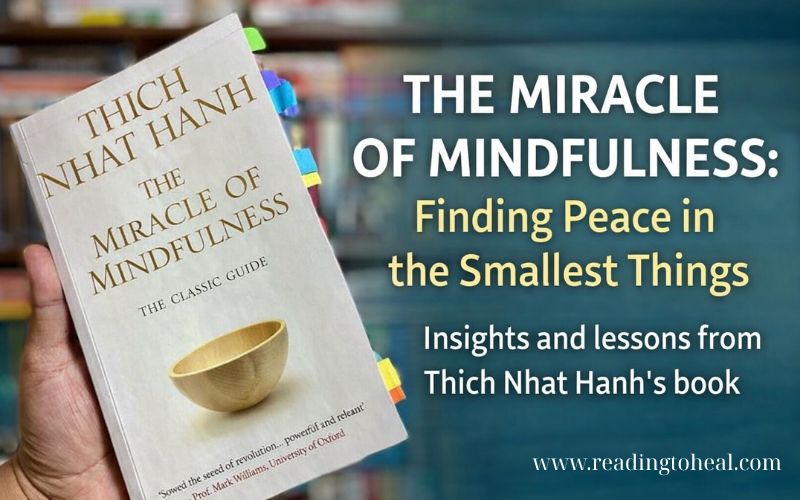
Today, I reread The Miracle of Mindfulness by Thich Nhat Hanh and realized many precious insights. I would like to share them with you in the following article, hoping it may help you find peace through this small book.
Mindfulness in Washing Dishes, Eating an Orange
At the beginning of The Miracle of Mindfulness, Thich Nhat Hanh ((affectionately known as “Thay” by his students) tells the story of Steve - a husband and a father of two children. In the early days, Steve was extremely exhausted by dividing his daily time into many parts: time for his children, for his wife, for grocery shopping, for housework, time for himself…
But now, Steve no longer divides his time that way. He “takes the time of his wife and children as his own time: studying with his children, he no longer has the notion that this is time for them, and that only after finishing this will he have time for himself.”
As Thich Nhat Hanh recounts, Steve says:
“I try to live for myself while studying with my children, I share their presence. I find interest while studying with them, and thus the time for them becomes time for me.”
Gradually, the other members of his family do the same - that is, “being present with themselves while being with others” - and this gives him an abundance of time.
This opening story startled me. I realized that I, too, divide my time in this way: time for my child, time for myself, making me feel all day long that there is “never enough time.” As a result, I am always busy and exhausted.
Reading Steve’s story, I realized that when we give time to someone, we need to be truly present in that time. When we are present, we find joy and peace - and that time is also time for ourselves. In this way, the whole day becomes a vast amount of time to live.
Then Thich Nhat Hanh talks about washing dishes. He writes that there are two ways to wash dishes.
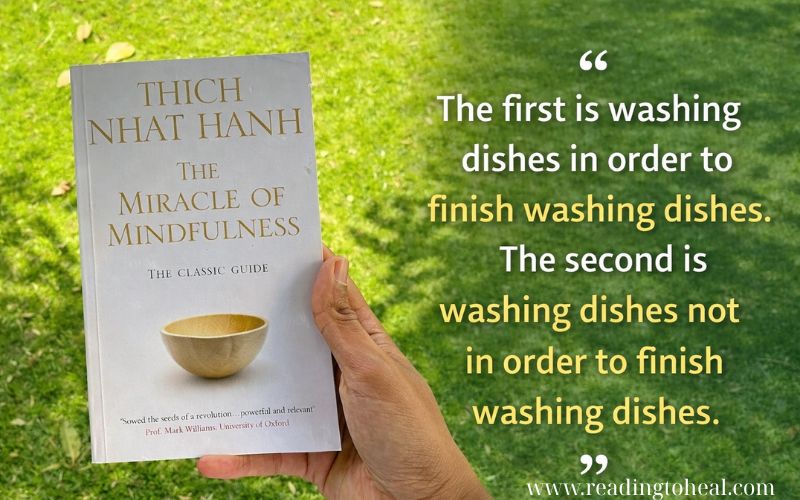
The first is washing dishes in order to finish washing dishes. The second is washing dishes not in order to finish washing dishes.
We usually follow the first way - washing dishes just to get them done, with the mindset of wanting to “finish quickly so we can do something else.”
Or the story of Jim, sitting and eating an orange with Thay but completely forgetting the reality of “eating an orange.” His mind is pulled into the future, into plans and calculations, while his hands are still peeling and his mouth is still eating the orange. As Thay says, “In fact, he is not eating the orange at all. He is eating his plans.”
Reading these small stories and looking back at myself, I see that I am just like Jim: eating in thought - or more accurately, I “eat thoughts,” “eat worries,” “eat regrets.” And I do everything while only wishing to “finish quickly,” finding no joy in everyday tasks.
Many of these simple yet profound teachings are also reflected in a collection of the most meaningful quotes from The Miracle of Mindfulness.
Setting Aside One Mindful Day Each Week
So what should we do to be able to “eat just to eat,” “wash dishes just to wash dishes”? In The Miracle of Mindfulness, Thich Nhat Hanh guides us in the practice of counting the breath and following the breath.
According to him, the breath is the bridge connecting body and mind; the breath harmonizes both body and mind; the breath establishes the unity of body and mind. Both body and mind are related to the breath, and the breath can be used to harmonize them, bringing about a state of calm clarity that illuminates both.
He also shares that he once suffered from a serious illness and took medicine for many years without recovery, but when he applied the method of mindful breathing, it saved his life.
Also according to Thay, we can practice twenty-four hours a day, not only when chanting or sitting in meditation. In other words, when working, washing dishes, walking, reading to our children, or even going to the bathroom - we are all practicing meditation.
Of course, Thay understands that “it is easy to talk about, but very difficult to practice regularly.” So what should we do? According to Thich Nhat Hanh, we should set aside one day each week to begin the practice, called “our day,” a day of mindfulness.
A helpful tip he suggests is to “hang something on the ceiling, on the mosquito net,” so that when we wake up in the morning and see it right away, we remember that this is a mindful day. Then we smile, knowing that we are fully aware…
On a mindful day, whatever we do is practice - do not wish to finish quickly. And do everything - eating, drinking, cleaning the house, bathing, wiping tables, cooking… - in such a way that we “find peace and joy while doing these things.”
In this way, let us devote a whole day to mindfulness. If this practice continues consistently for three months, it will surely bring about an important change in our lives. From one day, later we will be able to “practice the whole week” with ease. And then we will have one month each year, one year in our whole life, and this entire lifetime - and countless lifetimes - to practice…
Thus, from page to page, The Miracle of Mindfulness helps us understand the “right way to practice,” which is simply:
observe, recognize - that is enough.
Specifically, Thich Nhat Hanh reminds us that while practicing mindfulness, we should not let distinctions of good and evil, right and wrong dominate us and create inner conflict. Do not pull things toward you or push them away; do not love or hate them. Just recognize them - that is enough.
When you are new to meditation, do not wait to “see your true nature” or to “become enlightened.” Better yet, do not wait for anything at all. Especially do not wait to see the Buddha while sitting in meditation.
Before introducing the specific practices, Thich Nhat Hanh retells a parable by Lev Tolstoy with the most important lesson: there is only one important time - that is the present moment. The present moment is important because it is the only time in which we can truly be the master of ourselves. And the most important person is the one who is concretely living with us, standing right in front of us, because who knows whom we will encounter in the future. The most important work is the work of making the person who is concretely living beside us, standing before us, happy - because that is the true meaning of life.
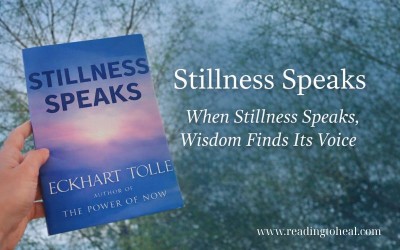
This understanding of the present moment also resonates deeply with Thich Nhat Hanh’s teachings in No Death, No Fear: Comforting Wisdom for Life.
The Practice Exercises in The Miracle of Mindfulness
Not only telling stories or discussing mindfulness, in the second half of the book Thich Nhat Hanh guides many important practices suitable for everyone.
For example, he guides the practice of smiling upon waking up in the morning, in moments of leisure, while listening to music, and when feeling irritated. Then there are relaxation exercises while lying down or sitting. Or practices of abdominal breathing, counting steps with the breath, counting the breath, following the breath while conversing…
And many mindfulness practices while washing dishes, making tea, bathing, cleaning the house… Practices that we have the opportunity to apply every day, every hour. The practice of returning to the breath and embracing stillness is further explored in Thich Nhat Hanh’s book Silence.
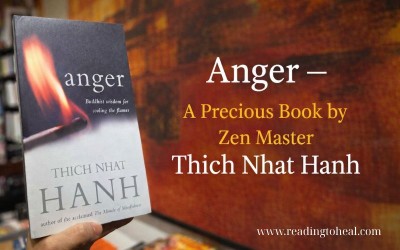
Yet mindfulness is not only about calm and quiet moments. When strong emotions arise - especially anger - we are invited to practice just as deeply. In Anger, Thich Nhat Hanh teaches how to recognize, hold, and transform anger with mindful breathing and compassionate awareness, turning moments of emotional turbulence into opportunities for understanding and healing.
And many mindfulness practices while washing dishes, making tea, bathing, cleaning the house… Practices that we have the opportunity to apply every day, every hour.
What is interesting is that Thich Nhat Hanh’s way of guidance in this book is extremely easy to understand. Unlike some Western spiritual teachers, his instructions are very gentle and subtle, and we can practice them immediately, right now.
The Miracle of Mindfulness is one of the best books by Thich Nhat Hanh (or rather, all of his books are good - there is no single “best” one). It is suitable for everyone, especially for those who are just beginning the path of inner transformation and self-understanding.