Michael A. Singer’s Living Untethered: Understanding the Ego - The Path to True Freedom
What does freedom mean to you? Is it escaping the imposition and control of those around you to live the life you choose? Or is freedom having material abundance - spending, eating, and traveling without a second thought? Is it an independent life, free from physical and spiritual reliance on others? Is it being the master of your own time, working leisurely at what you love, no longer startled by ringtones or suffocated by a schedule that withers both body and soul?
Then, is freedom for you perhaps the release from the shackles of invisible fears, judgment, criticism, prejudice, and pressure from family, relatives, colleagues, neighbors, or society, so you can live as your authentic self? To say what you think and do what you love while turning a deaf ear to the world’s scrutiny? Or is freedom, in the definition and longing of many, the escape from the cycle of greed, anger, and delusion - the mental and spiritual liberation that seekers strive for?
In truth, the deeper we dive into the question of what freedom is, the more clearly we realize that authentic freedom no longer comes from the outside but originates from the world within. Regardless of where you are, what you do, your circumstances, or what you face...
When you realize that every notion of happiness and peace - of freedom tied to an autonomous life, a perfect job, a plentiful bank account, a dream house, time sovereignty, flawless trips, or a fulfilling family - turns out to be just a castle in the sky, where changing or vanishing is only a matter of time.
At the same time, you clearly see the truth that freedom is always here, right now, and within you. In the midst of ordinary daily life, even through every hardship and crisis, we still possess equanimity when we realize that life is an experience. The more you can fully experience every path of life without identifying with what you go through, the more your soul will open, becoming more peaceful and serene. Then, even if the sky falls, even if the end of the world truly comes, you will at least have inner peace.
So, how do we step toward true freedom and live in such a state of peace? The book by spiritual master Michael A. Singer will help you.
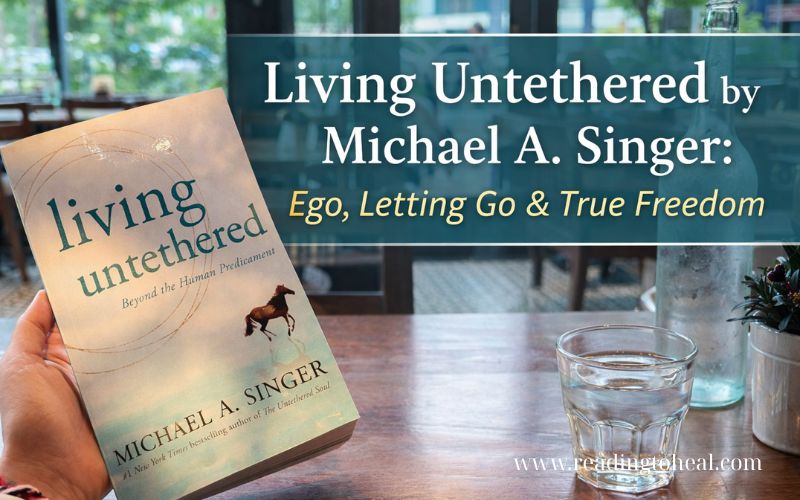
Titled "Living Untethered: Beyond the Human Predicament," it serves as the foundation (following his book "The Untethered Soul") to help you cleanse the persistent delusions and attachments of the ego, entering a life full of consciousness and authentic freedom.
This book belongs to the Mindfulness & Meditation Books collection in our Healing Books Shelf, where we explore works that guide readers toward awareness, inner peace, and spiritual freedom.
Now, let’s explore the lessons from this book with Reading To Heal!
In truth, the deeper we dive into the question of what freedom is, the more clearly we realize that authentic freedom no longer comes from the outside but originates from the world within. Regardless of where you are, what you do, your circumstances, or what you face...
When you realize that every notion of happiness and peace - of freedom tied to an autonomous life, a perfect job, a plentiful bank account, a dream house, time sovereignty, flawless trips, or a fulfilling family - turns out to be just a castle in the sky, where changing or vanishing is only a matter of time.
At the same time, you clearly see the truth that freedom is always here, right now, and within you. In the midst of ordinary daily life, even through every hardship and crisis, we still possess equanimity when we realize that life is an experience. The more you can fully experience every path of life without identifying with what you go through, the more your soul will open, becoming more peaceful and serene. Then, even if the sky falls, even if the end of the world truly comes, you will at least have inner peace.
So, how do we step toward true freedom and live in such a state of peace? The book by spiritual master Michael A. Singer will help you.
Titled "Living Untethered: Beyond the Human Predicament," it serves as the foundation (following his book "The Untethered Soul") to help you cleanse the persistent delusions and attachments of the ego, entering a life full of consciousness and authentic freedom.
This book belongs to the Mindfulness & Meditation Books collection in our Healing Books Shelf, where we explore works that guide readers toward awareness, inner peace, and spiritual freedom.
Now, let’s explore the lessons from this book with Reading To Heal!
FREEDOM BEGINS WITH IDENTIFYING THE EGO
We all know this planet has existed for 4.5 billion years, yet you, I, and all of us are but fragile beings - visitors who stop by for a moment and vanish after a few short decades.
Initially, especially during the vibrant years of youth, we all wish for a future path overflowing with happiness. But it seems the further we go, the more distant happiness becomes.
The chaos of each life stage - from education, career, romance, family, and children to economic burdens and mental pressures - constantly sweeps us into endless troubles and suffering. It seems that the more we walk, the more we betray our original longing for happiness.
Many are not yet aware of the ego
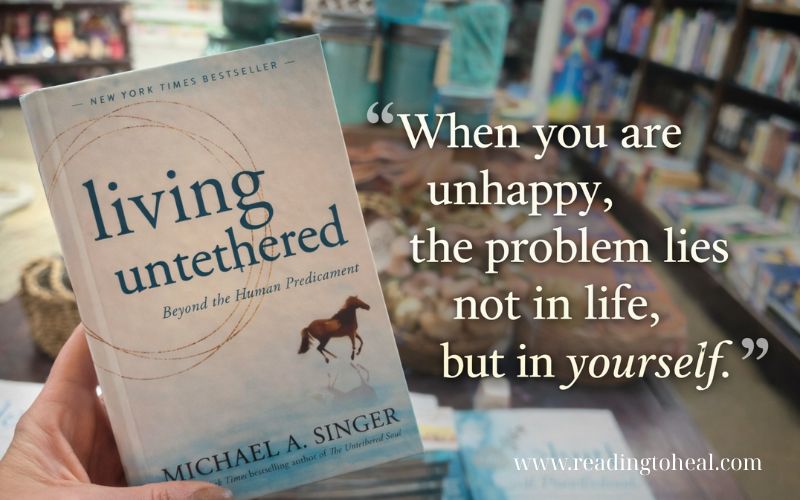
Author Michael A. Singer says that when you are unhappy, the problem lies not in life, but in yourself. Because you always walk around asking how to find happiness, while the right question to ask is: Why are you unhappy?
"How to get happiness" is a never-ending question because it comes from the ego. But the ego does not truly seek happiness; it only seeks to fill an inner void with external things, and that will never be enough.
Many people - if not most - have never known or been aware of the existence of what is called the "ego." Even those who regularly practice vegetarianism or chant sutras often find that life beyond the prayers is still filled with the echoes and manipulations of the deluded ego.
The ego, also known as the "self," is an instinctive, self-centered psychological structure made up of memories, perspectives unconsciously absorbed from those around you, traumas, expectations, and attachments to what is called "me" and "mine."
For example: I am this body; this emotion is mine; these possessions belong to me; my children, parents, and spouse are mine... You live your whole life protecting "me" and "mine," believing that life is nothing more than that.
Therefore, you panic when the body falls ill or a loved one passes away; you are hurt when others criticize or insult you; you argue with bitter anger when others have different viewpoints or lifestyles; you worry incessantly when your desires are unfulfilled or face a crisis at the threat of loss...
Thus, the three core pillars of the ego are greed, hatred, and delusion. They create an invisible prison where you always seek to control, possess, and prove your worth. You live in fear of being hurt, fear of loss, and a craving for recognition, so you struggle to steer life according to your will. That is exactly how the ego operates.
Furthermore, through education, media, and standards of success and happiness, society constantly encourages you to nurture and polish your ego, making you identify even more deeply with it.
It does bring you a bit of gratification - a flash of joy from a compliment, recognition, or possession - but it quickly fades. For instance, a single remark or a displeased look from someone can steal your joyful mood for an entire day, let alone larger events. The exhaustion, insecurity, anxiety, and suffering of a journey continuously seeking from life, from others, and from yourself still stretch across every footstep of the ego.
Yet, ironically, even when caught in that unconscious whirlpool, you still believe: "I am living a conscious life."
You might argue: "I know exactly what emotions I have; I am aware of my body and mind - if they aren't me, then who am I?" Answer this for yourself: If the body is yours, why does it not obey you? Why does it get sick, grow old, wither, and vanish over time? What about emotions - if they are yours, why can't you control anger, suffering, anxiety, jealousy, or envy? And the mind - if it is yours, why does it think so much that you cannot stop it?
Ultimately, who are you?
So, ultimately, who are you? You are not the body that changes every day, nor the complex and contradictory mind, and certainly not the chaotic, fickle mess of emotions.
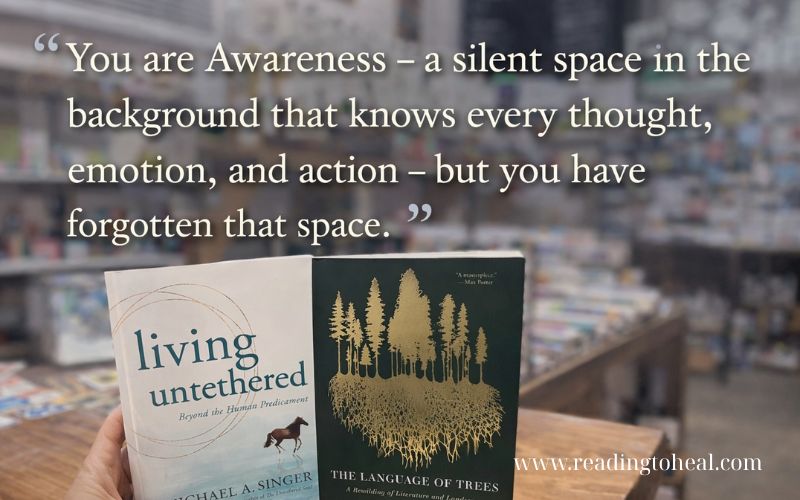
You are Awareness - a silent space in the background that knows every thought, emotion, and action - but you have forgotten that space. When you identify yourself with what you possess and experience, you allow the ego to dominate you, living in your stead and leading you through endless suffering.
So, by now, have you answered the author’s question as to why you are unhappy? Because you are a prisoner - a prisoner of the ego. The ego is your master.
Realizing the ego's control allows you to know that the true cause of every problem preventing you from living untethered is not life or other people, but the mind.
As spiritual master Eckhart Tolle once said: "You do not realize that you are a prisoner because the prison door has no bars; it is your mind."
HARMONY WITH REALITY – THE KEY TO EQUANIMITY
After you identify the personal ego that is controlling and dominating your life, gradually detaching yourself from it is a crucial and relatively difficult step - but it is the only path that helps you live with freedom, peace, and happiness.
Life has its own way of operating
One of the greatest illusions for most of us is thinking that freedom and happiness come from successfully controlling everything: emotions, thoughts, people, circumstances, even the weather...
But you must understand that life will never operate according to your will. The more you try to control, the more things tend to fall into two opposite extremes: one is attachment to things going your way - this "sweet bondage," as the author puts it, breeds the fear of loss; and the other is resistance to reality if it is unpleasant, leading to suffering and stagnation. Both are fundamental states of the ego - the thing that wants the world to revolve around it.
But the world was not created to please your ego. You need to become aware of how you are bound by a myriad of subtle forms before you can untie yourself. And you also need to clearly understand your own resistance to life to see through to harmony with reality and find freedom.
As Michael A. Singer and Eckhart Tolle often advise, life becomes easier not by trying to control the uncontrollable, but by controlling your reaction to life.
Now, try looking back at yourself when you try to control everything. When you want others to understand you, meet your demands, love you, respect you; when you want your children to act according to your own standards; when you want work to be smooth, or people around you to be cheerful, positive, and listen to your advice…
All of this forms a map of expectations demanding the world satisfy you. The world never hurts you, and others are not the ones who make you suffer; it is your own unmet expectations that leave you drowning in dissatisfaction and despair.
Stop resisting reality
Another author, Krishnamurti, in his book "On Freedom," suggests that freedom is when you no longer expect anything from life. This doesn't mean living passively, but letting go of the compulsion that "everything must be as I want."
Next, the second aspect of control is resistance. "I don't want this to happen," "Why did that person treat me so poorly?", "What kind of cruel, absurd rule is this?", "I can't forgive her for that action," "I can't live with a person like that," "Who is he to lecture me?"...
All such statements reflect a truth: you are resisting reality. You are not allowing the event to happen exactly as it is happening. At this point, the uncomfortable emotion is blocked by your internal resistance; it becomes a negative imprint forever anchored in your mind and heart - the place where unprocessed emotional scars reside.
All these negative imprints tend to accumulate throughout your growth; in Yoga, these are called Samskaras. Each Samskara is like a wound you cannot see, yet it exists, deepening prejudices and negative emotions, causing you to view reality through a narrow and biased lens regarding people and life.
And each time you resist, you sow a new Samskara. This is why trying to fight reality makes you suffer twice: once from the circumstance and once from the resistance to the circumstance itself.
For example, a person who was once betrayed will always tend to doubt love; a person frequently criticized as a child will lack confidence in society as an adult. Those Samskaras belong to the past, but they make you react as if the past were repeating in the present.
Ultimately, because of this, you cannot harmonize with reality or see reality for what it truly is. Therefore, discord will continue to arise.
4 METHODS TO HARMONIZE WITH REALITY
How do we see reality as it is, harmonize with it fully, and find peace and freedom? In the next part of "Living Untethered," Michael A. Singer explains in detail.
1. Let go of the need to control everything
This advice sounds like a weak and passive surrender. Is non-interference, non-retaliation, and non-resistance not passivity?
Not at all. It is not about stopping control in a careless way that denies all effort in life, but an action coming from a deep understanding of the nature of the mind and the nature of life.
As the author affirms:
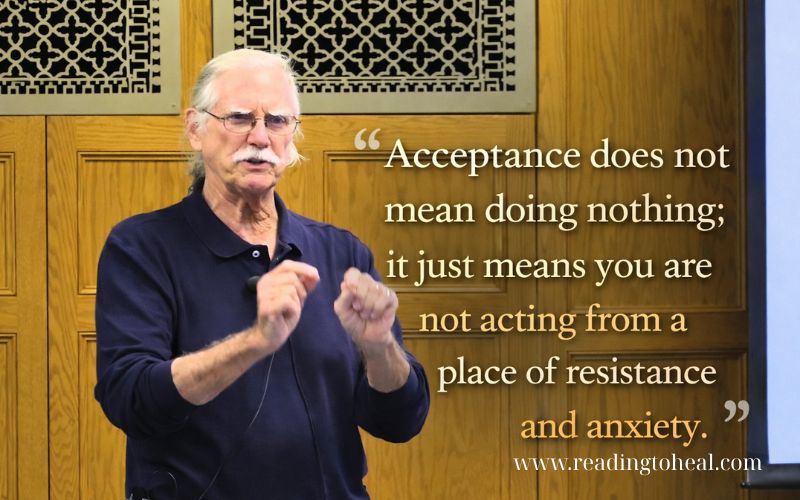
"Acceptance does not mean doing nothing; it just means you are not acting from a place of resistance and anxiety."
When you accept that some things are beyond your ability to intervene, you still live, still act, still work your hardest, still love and contribute - but not from a tight heart full of fear, nor are you dragged by the obsession of holding everything in your hands.
That is when you begin to live more freely and happily.
2. Stop identifying with emotions
Always keep in mind Michael A. Singer’s advice: emotions are not to be "processed" but to be "released." And emotions are not you; you are only experiencing them.
Do not drown in the emotion nor try to deny it; simply experience it fully by quietly observing, gradually detaching yourself from the emotion instead of identifying with it in any way.
In fact, this process doesn't require massive effort; it only requires learning how to respond correctly to the emotions you notice within.
For example, when worrying that an upcoming job change will be much more difficult, you don't know what will happen next, and the mind begins to paint every worst-case scenario. You are swept into that anxiety and not only lose your inner peace but also affect everything and everyone around you.
First, do not run away or try to ignore it. Stop and take a deep breath, identify and look directly at the anxiety and insecurity existing and churning in your body and mind. This will not make the feeling vanish instantly, but at least you are no longer letting it control you.
If the mind begins to speculate negatively, just identify and observe the thoughts as they come. Simultaneously, return to the present and understand that these are not real thoughts; they are just imaginary scenarios from a fearful mind trying to defend itself by manipulating you.
You are still here, in the present, still safe, and no matter what the future holds, you cannot live for the future in advance. The more you try to control things that aren't real, the more you live with illusions and lose your equanimity and the joy of life.
3. Become a conscious observer
We rarely live with full awareness; we usually just react out of habit.
Someone criticizes you, and you immediately get angry and defensive. A lover is tired and wants space, and you sulk because you feel abandoned. When a job fails, you find ways to blame others or torment yourself. Even when sad or bored without a clear reason, you escape by playing games, drinking, shopping, or traveling...
All those reactions come from an ego filled with wounds from emotional imprints or Samskaras that have not been understood or healed.
Similarly to Michael A. Singer, another spiritual master, Krishnamurti, said that it is not control or denial, but observation that is the only path to liberation from suffering.
Therefore, learn to be the observer; give yourself a little bit of mindfulness. For example, when criticized, do not rush to react or say anything; recognize the emotion and the mind preparing to resist and defend. From there, gain the calm to receive it without being dominated by negative emotions. You will have a wise response.
Or when a job fails, and disappointment, worry, or insecurity are unavoidable, do not rush to react. Give yourself a moment of silence to calmly observe the emotion - observe how the mind is operating, wanting to find excuses, blame, or berate yourself for being useless.
Just observing without judging will help the negative emotions and thoughts driven by past Samskaras gradually dissipate. At this point, you will see your mind more clearly and solve everything more effectively.
Or when a lover doesn't spend time with you, do not rush to blame, sulk, or speculate. Observe your inner self: is it because you are too lonely and empty that you always want others to compensate for an internal state that was already unstable? Then, the problem to be solved lies within you.
Practicing being the observer in every moment is a conscious presence where you see every internal movement without being pulled along by them; you will have a clearer perception of reality. Persistent practice will help you gradually blur past Samskaras and harmonize with reality more fully instead of dissolving into the ego.
4. Purify your heart
In essence, what you desire from the outside world - wealth, career, love, recognition - are not goals created by the mind alone; they are shaped and formed by the emotions in your heart.
Every desire in life is to satisfy a heart that always wants to feel secure. And of course, it only feels secure when everything is favorable. At this time, the heart opens, and you feel a love for life and an abundance of life energy.
And when things are unfavorable, it closes; your mood becomes heavy and gloomy. Every time it closes, a new Samskara is created, piling onto the old ones, causing energy to form knots until it congests and causes a blockage of the energy flow within you.
Like a river blocked by dams, the water must squeeze through obstacles, causing instability. Your energy must also squeeze through congested knots, and you will either gradually become narrow-minded - wanting the world to change to fit your unstable flow - or you fall into a state of chronic fatigue, depleted of inspiration and life energy.
Therefore, to purify the heart, help you harmonize with reality, and grow spiritually, you must see through the mechanics of the opening and closing of the heart.
First, become an internal witness observing the heart's opening and closing: Why does it open and why does it close?
When you love someone, your heart opens, causing energy to rise, and you live in a state of overflowing happiness. But you need to understand clearly that what fascinates you is not the other person, but the experience of love within you that the person brings. This experience of love feels so wonderful that you want to keep the person you love nearby to continue experiencing that feeling.
But for example, when living together long-term, their flaws - which actually stem from your own prejudices from Samskaras projected onto them - will cause their presence to no longer make your heart open. Do you see clearly here that the reason does not lie with the other person, but is your own internal experience projected onto them, leading to the closing of the heart? Eventually, you decide on an action, like resisting their flaws or leaving them to seek the next exciting experience.
Or look at the things you want to own, like a house, a beautiful car, or the most fashionable clothes. You want them not for their own nature, but because of the feeling they can bring you - security, recognition, pride - all belonging to the desires of your heart. When you have them, your heart opens to receive joy; when you cannot or lose them, it slams shut, cutting off peace.
Or when you argue and disagree with someone, you close your heart to escape and avoid solving the problem between the two of you; all these entanglements will continue to control your life without you knowing it. This negative energy will always subtly distort your perception and impose it on reality and others. All you need to do is observe and contemplate the opening and closing of your heart.
Next, after becoming an internal witness, let go of the reasons that cause your heart to close. How do you let go? In "Living Untethered," Michael A. Singer provides detailed instructions.
Letting go of accumulated Samskaras
Recall how many times your mind has changed its perspective on an event when you gained a new experience. Clearly, what you consider right, reasonable, or the truth in the present is just a very small slice of reality that your mind can see.
Therefore, do not trust your mind too much when it always thinks it is right while it is constantly lost in thoughts about itself. The mind is fundamentally just a collection of very limited data you have gathered throughout your past life - tiny compared to the dataset of the universe. It doesn't truly solve your problems effectively; what is significant and right in life is driven by the clarity from your spiritual heart.
If you can connect with it, keep it open during every experience of life. When negative emotions appear, that is when the past Samskaras you accumulated are triggered. At this time, observe your mind and let go of the attachment to the value system it expresses by practicing the "witness consciousness."
Witness consciousness will help you more easily let go of Samskaras from the past. Witness consciousness is the clear awareness in every moment that you are not your thoughts, nor are you the emotions within you; you merely perceive them and experience them.
Do not think or speculate about what you see from your mind or emotions. Just look, just witness, looking with a truly relaxed state of mind.
In cases where it is too difficult to just witness emotions and thoughts, you can use a bit of your higher mind to appreciate reality and not complain or get angry about what you are experiencing. For example, when it's too hot and you notice a complaining mind and a tired, frustrated emotion taking over: relax, let go, step back to experience the heat, and understand the miracle of the sunlight that gives you and all species life. At this point, gratitude will overflow and can defeat the discomfort within you.
Living in peace with all emotions
Live in peace with the expressive states of your heart - the way to let them harmonize with reality. The emotion itself that you can feel has never been the problem.
For example, grieving over the passing of a loved one or worrying about a job that isn't going well is the way your heart is expressing itself in harmony with what is happening.
The problem is that you cannot receive those emotions, not letting them harmonize with reality; instead, you often suppress or escape the feeling - like a heartbroken person or someone stressed by work seeking to forget pain through heavy drinking, a bored person drowning in the world of games, or a dissatisfied person immersing themselves in stimulants…
Or another example of behavior that causes emotions to be out of sync with reality: when hearing news that a former colleague you once had a conflict with has faced a crisis, you feel a bit relieved or even gloating; your mind even uses bitter words like "they deserve it."
Instead of feeling compassion for them, you are trying to release the energy accumulated from past experiences instead of letting it vibrate in harmony with the current situation. That is the manifestation of a heart not in harmony with reality.
In every moment from now on, recognize and savor the way your heart is feeling reality. Stop resisting and do not get swept away to lose yourself in emotion. Do not suppress and do not attach, causing it to stay and distort reality.
And always be grateful for your heart because it helps your soul become rich, helps you become a wonderful human being, and finally allows you to approach deeper spiritual states.
MEDITATION – THE WAY BACK TO YOURSELF
In the final part of "Living Untethered," Michael A. Singer advises letting meditation purify and lead you back to yourself.
According to Michael A. Singer, meditation not only helps with the ability to let go of accumulated Samskaras but also helps you achieve and maintain a clear, calm internal state, connecting more deeply with the essence overflowing with life energy and creativity.
Commit to yourself to spend at least some time for mindfulness meditation; sitting quietly for 15 minutes a day in the morning or evening is enough to bring you immense benefits. Mindfulness meditation is the awareness and observation of thoughts and emotions arising from your body and mind.
But if your mind and emotions are too chaotic to start meditating and you cannot sit still, start by relying on the breath because it is the bridge between body and mind.
Observe the breath in and out - 1, 2, 3 breaths - and then you might lose focus as thoughts begin to appear. Recognize this and then continue to return to relying on the breath. If it's too easy to lose yourself in the mind, the author suggests you can even count each breath.
Some people may also use a mantra like "Namo Amitabha" or a Mala prayer bead string to help them center the mind. Once you can sit a bit more peacefully, stop focusing on the breath or mantra; start to relax and observe the sensations in the body, the emotions from the heart, and the stream of thoughts in the mind constantly leading you to remember the past or imagine future scenarios.
Just be there with full awareness to observe all movements from inside and out. Gradually, with persistent practice over the years, you will be able to practice mindfulness in every activity you do and every life situation you face, not just during the moments you can quietly sit down without being disturbed.
Valuable message from Living Untethered
In short, we spend our whole lives chasing material things and external glory without understanding why we need to do so. If you now know that it is ultimately for the feeling of inner security, you also understand that the world cannot bring you true happiness and freedom when you always feel lack and misery from within. The world does not make you suffer; it is what you always hold onto inside that makes you miserable.
Equanimity is not built upon the conditions of your mind and heart. Equanimity is also not denying the value of those conditions, but liberating your own joy and happiness from all those conditions.
Freedom is when, in any circumstance or experience of life, you can go through it completely without resistance. Every day, remind yourself that your life does not end with making a living and material goals or shallow mental satisfaction, but it is also what the Buddha taught: liberating yourself from the ego within you. Persist in practicing letting them go; you will truly live untethered and be able to experience life at the deepest level.
That is the precious message from Michael A. Singer’s "Living Untethered"!